
Aboriginal and Torres Strait Islander people should be aware that this website may contain images, voices and names of deceased persons.
This work by Aboriginal artist Dennis Golding references patient-reported measures through indigenous cultural symbolism and creative practices of innovation.
Culturally safe care and PRMs
The Patient Reported Measures (PRMs) Program has been developed in partnership with Aboriginal communities to ensure every step from design to implementation reflects Aboriginal ways of knowing, being and doing. PRMs give people a voice in their healthcare by capturing what matters most to them, and can include things such as quality of life, cultural needs, connection to Country, family and community, and overall wellbeing.
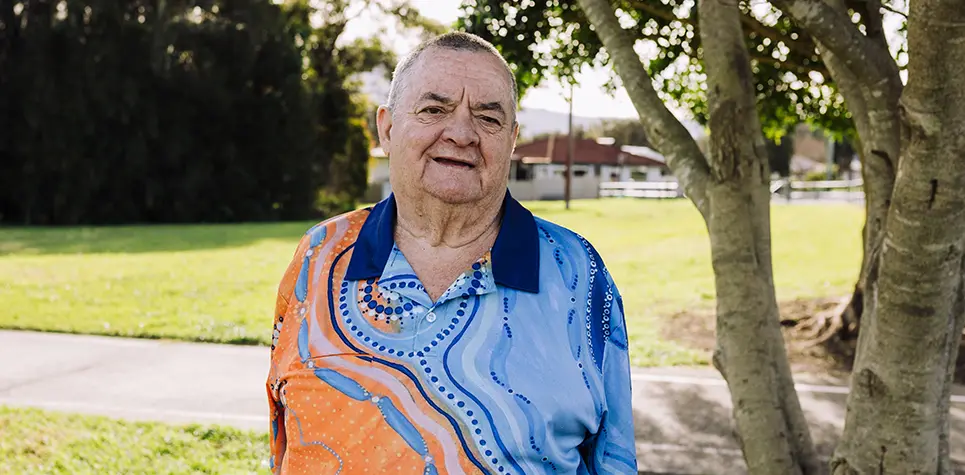
It gave me control over my own destiny and gave me a voice so I could converse with my own GP and other specialists.
By listening to people’s own perspectives, PRMs help health services deliver care that is culturally safe, builds trust and strengthens relationships. This approach supports shared decision making, identifies barriers such as communication challenges, and recognises cultural needs. This ensures care is not only clinically effective but responsive to the values and priorities of Aboriginal people.
Yarning guide
Use yarning when explaining patient‑reported outcome measures to Aboriginal consumers in a culturally safe and respectful way.
PROMs yarning cards
Introductory guidance for using yarning cards about patient-reported outcome measures (PROMs) to support discussions about what matters most to Aboriginal people and their wellbeing.
What Matters 2 Adults resource hub
Learn about how WM2A supports conversations about health and wellbeing, and access resources for Aboriginal people, communities and healthcare workers.
About how we work
How Aboriginal leadership, partnership and data governance guide our approach to patient reported measures.
Additional resources
Contact us
