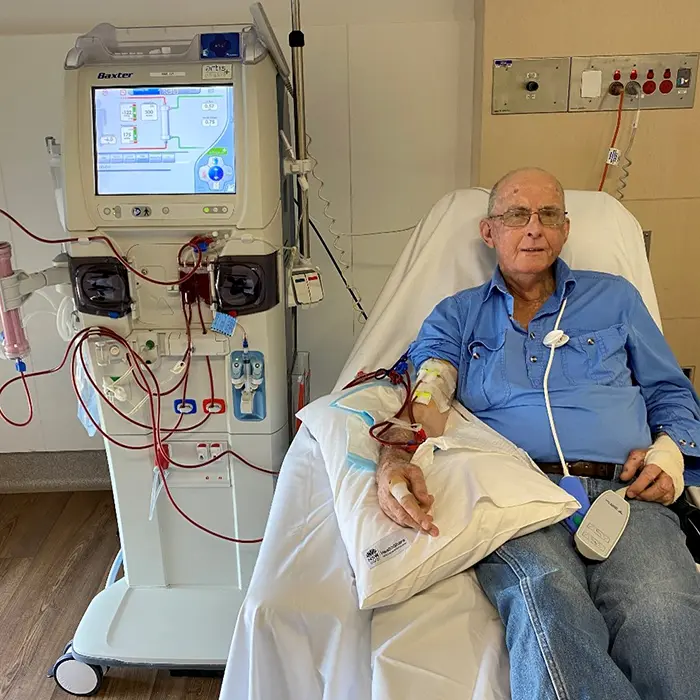
Facility haemodialysis is a way to remove toxins and extra fluid from the body in a hospital or satellite dialysis unit.
Two needles are inserted into a specially formed blood vessel (fistula or graft) or a central venous catheter (CVC). The patient’s blood is removed and runs through the machine (a dialyser) for filtering. It is then returned to the body once it has been cleaned of waste.
The machine monitors the blood flow and the amount of fluid removed. It also controls the temperature.
What to expect
In a facility, a dialysis nurse assists with dialysis. They set up the machine, connect the patient and check them during dialysis. When dialysis is finished, the nurse disconnects the patient from the machine and checks their wellbeing before they can go home.
The patient is given a set time for facility dialysis. It is usually 3 times a week (Monday, Wednesday and Friday or Tuesday, Thursday and Saturday). It runs for about 5 hours, morning or afternoon. The time of the scheduled session may impact on the patient’s work, schooling, childcare or other activities. The schedule has limited flexibility. It may be possible to occasionally change days to attend important life events or appointments.
Some facilities offer nocturnal dialysis, where dialysis occurs 3 nights a week while the patient sleeps at the facility. With overnight dialysis, the patient is free to do other activities during the day. There are fewer diet restrictions and a higher fluid intake. There may also be reduced symptoms and medications compared with standard dialysis.
Watch a video (My Kidney Journey) showing how haemodialysis works; the frequency and schedule; and how to prepare for it.
Types of facilities for haemodialysis
Satellite unit
A satellite dialysis unit may be attached to a hospital. It could be a standalone unit in the community away from, or close to, a hospital. Patients are generally quite stable.
In-centre
Patients with more serious medical problems will usually be dialysed in a hospital dialysis unit. For medical reasons, they may not be suitable to receive their dialysis in a satellite unit, because they may need access to medical care during dialysis. Some in-centre units also dialyse stable patients. Priority is given to patients with more serious needs.
Intensive care unit
Continuous renal replacement therapy (CRRT) is a non-stop, 24-hour dialysis therapy. It is usually done in hospital intensive care units. CRRT requires insertion of a catheter for dialysis either in the neck or the groin. It is used for patients with acute kidney injury or fluid overload, rather than those with kidney failure. A long-term dialysis patient may need CRRT if their blood pressure becomes unstable. This would replace their routine intermittent dialysis. It is a temporary form of dialysis.
Private dialysis unit
There are around 10 private dialysis units in NSW, mostly in metropolitan cities and a couple in regional towns. They offer dialysis to patients with private health insurance. A local health district may pay a private unit to dialyse some public patients if they have no spaces available.
Self-care in community or other setting
Self-care is for patients who have trained in home HD. They do their own dialysis in a community facility closer to home. This may be due to water or power issues, renting or lack of space in the person’s home. Water quality and supply can be challenging in rural and remote areas.
Discussion points
The following points are for the renal healthcare team, patient and care partners to discuss and consider together. These conversations can help identify the treatment option that best meets each patient's needs and preferences.
Clinical considerations
Clinical considerations for all treatment options:
- Comorbidities: other health issues, such as diabetes, cardiovascular disease, obesity cancer, frailty, etc.
- Lifestyle: diet, exercise, smoking, drinking, recreational drug use, etc.
- Goals of care: including advance care plan, advance care directive, resuscitation plan
- Maintaining a healthy sex life
- Considering pregnancy
Specific clinical considerations for facility HD:
- Needle phobia (HD requires large needles and blood removal)
- Challenging behaviours
- Access to dialysis unit
- HD as preparation for transplantation, if eligible
- Withdrawal from dialysis
Patient considerations
Patient considerations for all treatment options:
- Goals: what matters to the patient, e.g. caring for others, family events, children, grandchildren, farming, travel, school attendance
- Values: balancing quality of life, length of life, dignity, body function, difficult treatments, relief of pain and suffering, fear of dying
- Social support: independent, carer for someone or receiving care, full time or part time
- Work: full time, part time, retired, school, university
- Activities: sport, clubs, hobbies
- Life stage: age, accomplishments, bucket list
- Transport: treatments, medical appointments
Aboriginal people
Aboriginal people may have additional considerations which should be discussed prior to choosing this treatment:
- Personal or generational trauma around doctors and hospitals
- Long periods of time away from mob while on dialysis in a facility
- Travelling long distances to access dialysis or specialist appointments; especially when balancing caring commitments for children and the elderly
- Consider suitability for virtual care
Children and young people
For children, HD is an effective way of removing excess water and waste products from the body. It is rarely the first treatment choice for young babies or toddlers with kidney failure. It is technically more difficult than other types of dialysis. Children often need blood transfusions.
Other considerations include:
- missing school
- often needing more treatments each week
- the weight of the child, which can affect treatment choice
- the child’s age.
More about transitioning from paediatric to adult renal services and transition care resources.
Resources
Haemodialysis: A child’s guide
A child-friendly video explaining what happens during facility haemodialysis.
Source: The Royal Children’s Hospital Melbourne
Haemodialysis
Information for parents and carers of children about preparing for dialysis, access for HD (fistula or central venous line), tests, risks, changing treatment, support. It also has links to information documents to download.
Source: infoKID
Benefits
Discuss the following benefits of facility haemodialysis:
- The HD machine does the work of your kidneys
- Staff supervise dialysis
- No need for training
- Choices during the long hours of dialysis, such as companionship with others, or quiet time sleeping, reading, watching videos or studying
- Social interaction in the facility
Risks and disadvantages
Discuss the medical, practical or personal reasons why facility HD may not be the right choice of treatment for a patient:1
- Depending on system capacity and/or clinical needs, a patient may need to go to different dialysis units in a week
- It is a set schedule with limited flexibility
- Time and financial costs of travel, fuel and parking to and from the dialysis unit, usually 3 times a week
- Limited public transport options at most dialysis units. A patient may need to drive themselves or have care partners take them to and from dialysis
- Travel time may take several hours, multiple times each week; particularly for rural and remote patients
- Additional wait time after dialysis to ensure patient is safe to go home
- Vascular access options may become limited after a long period of time on HD
- Limited holiday travel
Refer to the comparison section for a summary of the key features of each type of dialysis.
References
- National Health Service UK. Complications of dialysis. Cited 16 Feb 2024.