Peritoneal dialysis (PD) is a way to remove waste products from the blood when kidneys start to fail.
The peritoneal cavity is the space between the peritoneum (lining of the cavity) and internal organs. This area is also sometimes called the belly, stomach or abdomen.
In PD, the peritoneum acts as a filter to remove waste products from the blood. A PD catheter (tube) is inserted into the peritoneal cavity to allow a cleansing dialysate fluid to flow in and out.
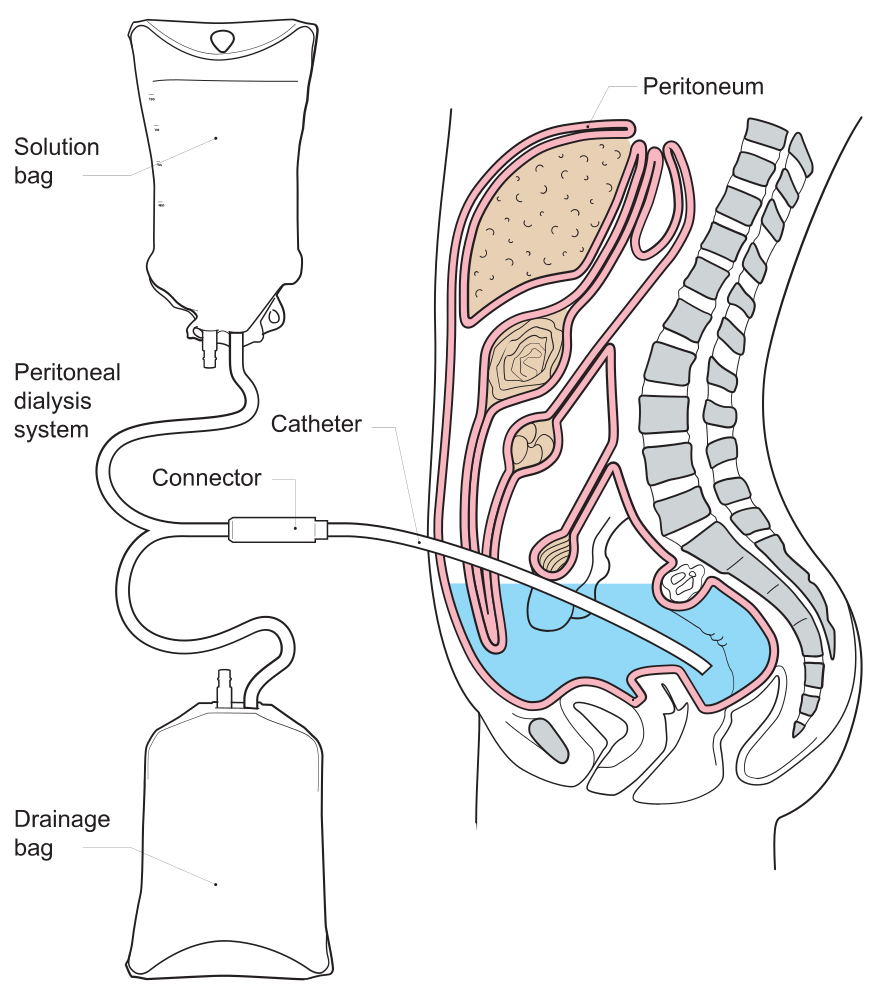
After a set period of time, the fluid with the filtered waste products is drained out of the peritoneal cavity and discarded.1
Where the tube is seen on the outside of the body is called the exit site, and it needs daily care to keep it clean. Special belts are available to patients to keep the catheter secure when not in use.


Types of peritoneal dialysis
There are 2 kinds of PD:
- continuous ambulatory peritoneal dialysis (CAPD)
- automated peritoneal dialysis (APD).
Each one can be used separately or in combination. PD can also be combined with facility haemodialysis (hybrid dialysis).
Each person requires an individual amount and type of dialysis to effectively remove waste from their blood, which will be determined in consultation with a nephrologist (kidney specialist).
The cleansing fluid (dialysate) in the peritoneal cavity may need to cycle through several times in the day or through the night.

Continuous ambulatory peritoneal dialysis
CAPD is also called manual bag dialysis.
During CAPD, the patient connects a new bag of dialysis fluid to their PD catheter. The old fluid, which contains waste from the blood, drains out. Then fresh dialysis fluid flows into the belly.
This process, called an exchange, can occur several times. Once completed, the patient disconnects the bag and can go back to their normal daily activities.
Automated peritoneal dialysis
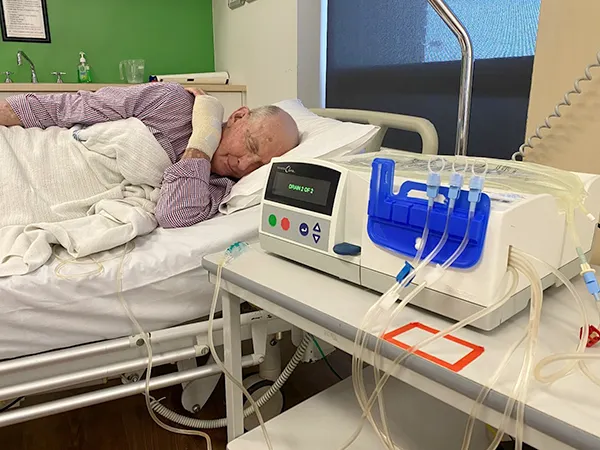
APD is also called machine dialysis.
It uses a machine, called a cycler, to fill and empty the peritoneal cavity multiple times during the night through the PD catheter. This happens several times during the night. The machine can also be used to do extra exchanges in the morning or during the day if needed.
Once everything is set up, the patient usually stays connected to the machine overnight and sleeps while the machine automatically exchanges the dialysate fluid.
Resources
Peritoneal dialysis at home
Detailed information about PD, including a video about how it works, how to do it and benefits of PD.
Source: Baxter My Kidney Journey
Discussion points
The following points are for the renal healthcare team, patient and care partners to discuss and consider together. These conversations can help identify the treatment option that best meets each patient's needs and preferences.
Patient considerations
Patient considerations for all treatment options:
- Goals (what matters to the patient, e.g. caring for others, family events, children, grandchildren, farming, travel, school attendance)
- Values (balancing quality of life, length of life, dignity, body function, difficult treatments, relief of pain and suffering, fear of dying)
- Social support (independent, carer for someone or receiving care, full time or part time)
- Work (full time, part time, retired) school, university
- Activities (sport, clubs, hobbies)
- Life stage (age, accomplishments, bucket list)
- Transport (treatments, medical appointments)
Specific patient considerations for PD:
- Importance of independence and self-management
- Isolation from other PD patients
- Sufficient storage space for all the dialysis equipment, such as machines, bags and other supplies
Clinical considerations
Clinical considerations for all treatment options:
- Comorbidities (other health issues such as diabetes, cardiovascular disease, obesity cancer, frailty)
- Lifestyle (diet, exercise, smoking, drinking, recreational drug use)
- Goals of care (including advance care plan, advance care directive, resuscitation plan)
- Maintaining a healthy sex life
- Considering pregnancy
Specific clinical considerations for PD:
- Surgeries (especially recent abdominal surgery with stomach scarring, hernias or adhesions)
- Gut issues (inflammatory bowel disease, hernia, frequent bouts of diverticulitis, weight gain)
- Functional status (memory, concentration, manual dexterity, strength, eyesight)
- Home environment (electricity, water, materials storage space, drainage, temperature control, phone connection, type of home, stairs, pets)
- Utilities (patients may need to check with their local council and water utilities service about handling the waste products and sharps)
- Distance to the nearest facility if home dialysis is not suitable
- Flexible timing of dialysis
- Training (one to 2 weeks free of charge by specialist dialysis nurses, usually as an outpatient, so the patient may need accommodation close to the training unit for this time)
- Commitment to:
- go to training
- follow the prescription (schedule) for doing peritoneal dialysis
- attend scheduled visits at dialysis centre and kidney doctor, and home visits by kidney nurses
- take care of catheter and machine
- take the medications
- follow diet and fluid intake recommendations
- regular blood tests
Aboriginal people
Aboriginal people may have additional considerations to be discussed for this treatment:
- Wish to stay on Country
- Support from mob to remain as healthy as possible
- Don’t have to go regularly to hospital (as for haemodialysis)
Children and young people
Children and young people have additional considerations to be discussed for this treatment. Discussions will usually include parents and guardians.
Children may not fully understand what kidney failure means. PD can be a difficult and stressful experience for a child. It may cause embarrassment and create a burden on the family to keep the catheter site clean. The healthcare team can support children and their families by providing education, helping access financial support, and arranging ways to do PD outside the home if needed.
PD is often the preferred mode of dialysis in children as it is the simplest dialysis treatment and allows full-time attendance at school.
For babies with kidney failure only, PD can be used long‑term. However, for babies who are born with other serious conditions, the outlook may be poor. These conditions may affect the brain, nerves, heart or lungs. In these situations, dialysis may not improve the outcome.
Resources
Peritoneal dialysis
Information for parents and carers of children thinking about PD.
Source: infoKID
Benefits and advantages
Benefits of peritoneal dialysis require discussion and understanding:2
- PD can be done at home, at work or while travelling
- Continuous treatment (usually daily) with fewer dietary restrictions and medications
- Preserves the function of patient’s own kidneys
- Flexible treatment program that suits patient’s lifestyle
- Gentle form of dialysis that is easier on the body
- No needles (cannulas) required
- Easy to learn
- Minimal out-of-pocket costs for the patient
- Minimal home modifications
Risks and disadvantages
There may be medical, practical or personal reasons why PD is not the right choice of treatment for a patient:3
- Poor manual dexterity (using hands and fingers)
- Trouble caring for self or a lack of carer support
- PD associated infection: peritonitis (infection of the abdominal space), exit site infection (infection of the skin around the catheter), or tunnel infection (infection of the track between the skin and the abdominal space)
- Extra care and clinical advice is required if swimming
- No soaking (bath, spas, etc.)
- Time on PD may be limited to several years due to change of the peritoneal membrane over time.
- Treatment becomes less effective over time and a patient may need to switch to another treatment.
References
- Mayo Clinic. Peritoneal Dialysis. Cited 1 September 2023.
- National Kidney Foundation. Peritoneal Dialysis. 2021. Cited 1 Sep 2023.
- National Health Service UK. Complications of Dialysis. Cited 16 Feb 2024.