Thank you to the clinicians, health managers, consumers and stakeholders who work with us to drive healthcare innovations across NSW.
Clinical network updates
The latest news, moves and events from our clinical networks.
The Blood and Marrow Transplant and Cellular Therapies Network has worked in partnership to support the introduction of chimeric antigen receptor (CAR) T-cell therapies as routine treatment options at Royal North Shore Hospital. Patients with relapsed or refractory lymphoma and acute lymphoblastic leukaemia will benefit from the new program, led by internationally recognised CAR T-cell specialist Professor Cameron Turtle. Royal North Shore Hospital joins Royal Prince Alfred Hospital and Westmead Hospital in providing this statewide service. Learn more about eligibility, referrals and contact details.
More about the Blood and Marrow Transplant + Cellular Therapies Network
Clinicians managing patients with burn injuries can use the updated clinical practice guide to the transfer and retrieval of burn patients from the Statewide Burn Injury Service.The resource provides guidance to assess, stabilise and transfer patients to specialist burn services. It aims to improve outcomes for patients by standardising burn care in NSW and supports clinicians in early recognition, appropriate referral and timely escalation across the patient journey.
The network has translated a key delirium information brochure for consumers into 5 community languages: simplified and Traditional Chinese, Arabic, Hindi and Vietnamese. The brochure provides information for people who have experienced or are at risk of delirium, and their families and carers.
A new clinical practice guide from the Maternity and Neonatal Network supports maternity services to provide safe and evidence-based care for people experiencing hypertension in pregnancy, including gestational hypertension, preeclampsia and chronic hypertension. Early identification and effective management such as monitoring, medication and coordinated care, can prevent complications, optimise growth and development for babies, and improve outcomes for both mother and baby.
Fact sheets for consumers in English and 5 other languages are also available to help clinicians give women clear, evidence-based information about hypertension that supports them during and after their pregnancy.
Celebrating a successful rollout
To celebrate the completion of the Statewide Menopause Initiative’s implementation phase, we held a virtual awards ceremony in May to highlight individuals, teams and services who have made an outstanding impact. Congratulations to the award recipients:
- Menopause Champion – Allied Health Award: Laura Worthing, Central Coast Local Health District
- Menopause Champion – Nursing Award: Heidi Cairney, Hunter New England Local Health District
- Menopause Champion – Medical Award: Dr James Brown, South Western Sydney Local Health District
- LHD Impact Award: Holly Miller and Laura O’Flynn, Nepean Blue Mountains Local Health District
- Systems Change Award: Specialist Menopause Service Hub, South Western Sydney Local Health District
- Equity and Culturally Respectful Care Award: Kelly Armstrong, Central Coast Local Health District
- Collaboration and Partnership Award: Gillian Neil, Gretta Walsh, Zoe Flick, Monica Fraser, Joanne Perks and Georgia Watson, South Eastern Sydney Menopause Cluster
- Innovation in Practice Award: Menopause Group Education Program, Hunter New England Local Health District
Thank you to everyone who has shaped the journey for consumers, the statewide implementation working group and Sistapause. And to our 5 clinical co-chairs who have led the statewide community of interest – your expertise, commitment and guidance have been instrumental in implementing sustainable menopause services across NSW.
Scaling menopause resources for refugee communities
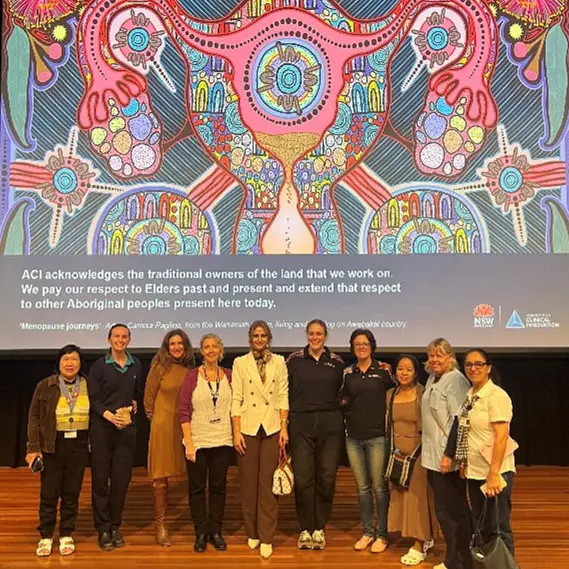
In May, we ran two workshops in Coffs Harbour with 120 refugee women from 6 language groups living in rural and regional areas, to improve equity and access to evidence-based health information.
With support from interpreters and community facilitators, participants provided valuable feedback on existing resources to help scale culturally appropriate and accessible content.
The workshops were delivered in partnership with TAFE NSW, Mid North Coast Local Health District Refugee Health, local menopause service staff, the Multicultural and Refugee Health Interpreter Service, refugee support service STARTTS and other community partners.
The next phase for the Menopause Initiative
The ACI’s implementation support for the Statewide Menopause Initiative is now complete, and local health districts will support the ongoing sustainability of the menopause hubs and referral sites. The menopause hubs will continue to deliver MenoECHO, providing case-based learning opportunities for GPs, medical specialists, nurses and allied health professionals. An established community of practice will support ongoing shared learnings, networking and capability development across clinical teams.
The ACI’s Menopause Initiative manager Danella Hackett will continue to scale existing refugee community menopause resources for the ACI and will support the Ministry of Health to evaluate the initiative. After making a significant contribution over the past 4 years, particularly in building redesign capability, Liza Loobeek will move into an evidence generation and capability role in the ACI’s InSITE Directorate.
The Surgical Care Network's new evidence-based ambulatory hysteroscopy model of care supports NSW Health services to provide safe, same-day diagnostic hysteroscopy without general anaesthesia.
The model shifts suitable procedures from operating theatres to ambulatory settings, which helps to:
- improve patient experience
- shorten recovery time
- lower the risk of complications
- free up operating theatre resources.
The Institute of Trauma and Injury Management (ITIM) held a Dubbo and Orange Trauma Evening in April and a Paediatric Trauma Seminar in May, to support statewide capability building, strengthen trauma care consistency, improve access to expertise and support a more connected, equitable trauma system in NSW.
ITIM delivered these events in collaboration with partners including the Sydney Children’s Hospitals Network, John Hunter Children’s Hospital and trauma teams in Dubbo and Orange Health Services. More than 1,000 clinicians from metropolitan, regional, rural and remote NSW participated in-person and online to share learnings and engage in practical discussions. Case-based sessions focused on strengthening local pathways, escalation processes, transitions of care, alignment across trauma services, consumer stories and Aboriginal culturally safe and trauma informed care. Attend an upcoming session by subscribing to ITIM’s news and events.

Statewide program updates
The latest news, moves and events from our statewide programs.

Students in the second cohort of the 2026 Graduate Certificate in Healthcare Redesign program welcomed Aboriginal Lived Experience Advocate Ieyesha Campbell to a Diagnostics Workshop on 16 June.
Ieyesha brings a wealth of experience as a consumer and advocate. A proud Dunghutti woman from Kempsey, she has dedicated much of her time to sharing her lived experience and advocating for better outcomes for Aboriginal people living with kidney disease. Her passion for improving healthcare and amplifying consumer voices has been recognised nationally, including as a finalist in the 2023 National NAIDOC Youth Award.
In 2019, Ieyesha was invited to share her story to inform the diagnostic phase of a redesign project undertaken across the Mid North Coast Local Health District. Since then, she has continued to grow into her consumer advocacy role by sharing her story and influencing healthcare improvements.
Ieyesha shared her journey living with chronic kidney disease and navigating the health system. Speaking candidly to the redesign program students, she highlighted the challenges and lasting impacts healthcare can have on individuals, families and communities, and identified opportunities for more compassionate, person-centred care.
Ieyesha helped me realise we can include patients in our research project, which we previously had not considered. I believe this will open our project up and provide valuable input to the outcomes.
The program encourages students to look beyond processes and data to better understand the people affected by healthcare systems. Students learn how to engage consumers and uncover the stories behind the issues they are working to improve, helping to drive sustainable innovation.
For anyone considering sharing their healthcare experiences, Ieyesha has a simple message: “Your story matters, your voice will make a difference.”
Access new patient reported outcome measure (PROM) tools
New PROMs tools have been released to support the growth of patient-reported measures (PRMs) across NSW, including:
- Breastfeeding Self Efficacy Scale – Short Form (BSES SF)
- Bath Ankylosing Spondylitis Disease Activity Index (BASDAI)
- Family Appraisal of Caregiving Questionnaire for Palliative Care (FACQ-PC)
If your service is interested in using these tools, contact your local PRMs Lead or email
aci-prm@health.nsw.gov.au
New resources to support the success of PRMs with Aboriginal communities
A new PRMs Aboriginal health resource toolkit includes a yarning guide and cards to help health professionals have conversations in a culturally safe and respectful manner when using PRMs at the point of care. Yarning helps clinicians better understand and respond to what matters most to Aboriginal patients and carers, to support the uptake and effectiveness of PRMs with Aboriginal communities. We have partnered with the ACI Aboriginal Health and Wellbeing directorate and worked closely with Aboriginal communities and health professionals to create the toolkit.
If your service is interested in printed versions of the cards, please contact your local PRMs Lead or email aci-prm@health.nsw.gov.au
Designing a culturally safe implementation of What Matters 2 Adults
A Juneworkshop brought together 40 Aboriginal health professionals, patient-reported measures experts and NSW health leadership teams to plan a culturally safe implementation of the What Matters 2 Adults (WM2A) patient-reported outcome measure (PROM).
The online and in-person workshop explored the best outcomes for people and communities completing this PROM, designed by and for Aboriginal people. Participants developed a WM2A decision support guide, key messaging and stakeholder and resource mapping.
A working group will oversee readiness activities ahead of implementation. Local health districts and speciality networks interested in embedding the WM2A can reach out to your local PRMs lead and Aboriginal health team.
Connect and stay informed about Patient Reported Measures
Sharing insights and expertise at the Virtual Care Exchange Forum
Our May Virtual Care Exchange Forum brought together 146 clinicians, researchers and healthcare professionals to showcase innovative approaches to delivering care using virtual models. Key topics included:
- remote patient monitoring supporting post-discharge nutrition
- telehealth approaches to improve medication safety for patients undergoing cancer treatment
- increasing access to specialist care in regional areas through the Telestroke TeleMDT (multidisciplinary team)
- research on digital pulmonary rehabilitation, telehealth chronic pain programs and virtual cognitive rehabilitation.
Join the Virtual Care Network to learn about future forums.
Improving access to fracture care
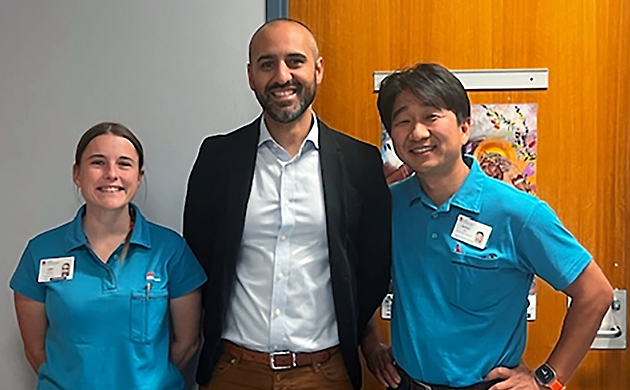
The latest case study in our virtual care spotlight series showcases how Hunter New England Local Health District is improving access to fracture care with a virtual clinic.
Using an evidence-based and clinician-led triage model, the virtual fracture clinic helps patients access specialist care sooner, while reducing unnecessary patient travel and demand on in-person fracture clinics.
Support patients to attend appointments and troubleshoot technical issues
Clinicians can support patients, families, carers and colleagues by using or sharing the following updated resources:
- Help patients resolve common virtual care technical issues with the updated Virtual Care Consumer Troubleshooting Guide. It provides practical, step-by step instructions to help ensure patients have a smooth experience, build their confidence, and improve patient and system digital health capability.
- An updated information sheet for patients, families and carers who attend palliative care appointments using virtual care has been translated into 10 languages. It explains how virtual care can complement in-person care, and helps people understand their options and feel more confident attending virtual appointments.