Published: June 2026. Next review: 2031.
Armidale Hospital introduced a Virtual Fracture Clinic in January 2024 to reduce unnecessary travel and improve access to specialist care. The model helps patients receive the right care sooner, while reducing demand on in-person fracture clinics.
Armidale Hospital services a large regional, rural and remote area across Hunter New England Local Health District (HNELHD). It provides acute and sub‑acute care to people in the Armidale community, surrounding towns and rural localities. Armidale Hospital also supports patients from more remote parts of the district who require higher‑level clinical services.
Improving access
- The hospital’s fracture clinics run twice a week and are often overcrowded, creating a high-pressure work environment. Previously, patients would routinely travel up to 3 hours for injuries that could be managed without an in-person orthopaedic visit.
- In January 2024, the hospital introduced the Virtual Fracture Clinic to address these challenges. Its clinician-led triage model is based on an established approach used in the United Kingdom (UK), and implemented at Royal Melbourne and Royal Prince Alfred hospitals.
- The virtual clinic enables a senior orthopaedic consultant and senior physiotherapist to review referrals together, which allows simple injuries to be managed without a clinical visit where appropriate.
Workflow
-
Criteria
- Decisions are made case-by-case at the consultant’s discretion and supported by injury-specific guidelines.
- Common presentations screened out* to the virtual clinic include:
- paediatric wrist buckle and greenstick fractures
- simple ankle Weber A fractures
- simple non-displaced foot fractures
- patella and shoulder dislocations (no acute fracture)
- toe fractures
- simple finger fractures.
-
Referral
- Emergency departments (EDs), GPs, paediatricians and other treating clinicians involved in the patient's acute care.
-
Triage
- Orthopaedic consultant and senior physiotherapist review every referral, X-ray and ED documentation.
-
Care
- Patient is assigned to appropriate care pathway – they either remain as an in-clinic patient or are screened out* to the virtual clinic.
- Patient, parent or carer receives a call from the physiotherapist to explain pathway and provides advice; administration officer sends a written summary letter.
* Screened out refers to patients whose referrals are reviewed through the Virtual Fracture Clinic and determined not to require an in-person orthopaedic appointment. These patients are redirected to the most appropriate alternative pathway — such as physiotherapy, hand therapy, GP or phone advice — avoiding an unnecessary trip to the fracture clinic.
Multidisciplinary team
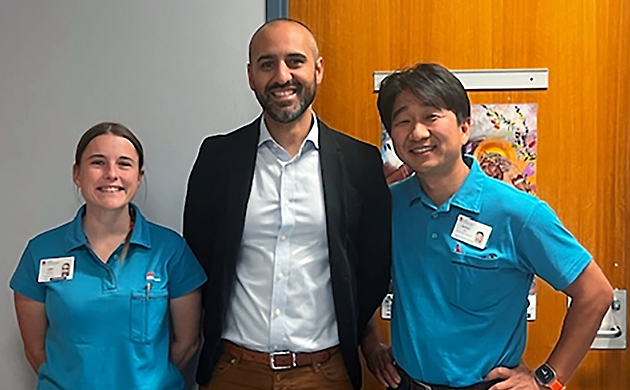
The virtual fracture clinic team consists of:
- orthopaedic consultants
- wound nurses
- senior physiotherapists
- local and satellite physiotherapy teams
- administrative support
- registrars who have been upskilled to take on triage responsibilities.
The clinic works with Aboriginal Health Workers and Practitioners to improve service planning, delivery and care for Aboriginal patients, and offers additional support and engagement through these workers.
Key enablers
Implementation
- The Virtual Fracture Clinic was introduced directly into standard operation in January 2024, drawing confidence from the established UK evidence base.
- The clinic adapted initial inclusion and exclusion criteria from the UK model and refined them to reflect local injury patterns and clinical context. The team developed injury-specific guidelines to support consistent decision-making.
- As the model was championed from the beginning by the orthopaedic consultant, clinician buy-in was immediate given the existing challenges of the fracture clinic. The broader team supported the change after seeing the positive impact on clinic conditions.
- Ongoing feedback from staff has informed continuous refinement to meet local needs.
Clinical governance and safety
- Continuous improvement: a formal 12-month audit reviewed re-presentation rates, clinic volumes, length of stay, did-not-attend rates, telehealth uptake and staff satisfaction.
- Audit informed practice change: hand and finger fracture criteria tightened after audit identified cases where deformity could not be reliably excluded on X-ray alone.
- Re-presentation rate: 3.7% (16/428) returned to clinic – 8 for ongoing pain, 4 for finger deformity concerns, 3 by personal request, one clinician concern.
- Escalation to surgery: 2 patients (0.45%) required surgery. All 16 patients who returned were seen within the standard 2-week timeframe.
Impacts and outcomes
- Since the launch of the virtual clinic in January 2024, Armidale Hospital has seen a significant and sustained reduction in fracture clinic demand.
- Over 2 years, 804 of 2,335 referrals (34.4%) were screened out to more appropriate care, generating an estimated $414,480 in savings (based on $176 per appointment).
- Telehealth uptake increased by 5.62%, reflecting better identification of patients suitable for virtual care by locally based clinical staff.
- Did-not-attend rates remained stable, with no meaningful change over the 2-year period.
| Metric | 2023 | 2024 | 2025 | Overall |
|---|---|---|---|---|
| Total appointments | 4,089 | 3,134 | 2,689 | 1,400 fewer |
| Cost (~$176/appt) | $719,664 | $551,584 | $473,264 | $414,480 saved |
| Avg patients per clinic | 40 | 30 | 26 | 14 fewer |
| Avg length of stay (mins) | 69.25 | 59.86 | 63.79 | 5.46 fewer |
| Did not attend (DNA %) | 9.05% | 8.87% | 12.98% | No real change |
| Telehealth appointments (%) | 13.38% | 21.03% | 19% | +5.62% |
| Referrals screened out (%) | — | 40.5% | 29.4% | 804/2,335 = 34.4% |
Patient benefits
- 40.5% of patients avoided an unnecessary clinic visit (428 of 1,056 referrals redirected in the first year). This means patients avoided travel time and expenses, and associated challenges including work and caring responsibilities.
- Faster access to the right care through immediate referral, e.g. more than 56% of redirected patients sent directly to physiotherapy or hand therapy.
- Paediatric patients with wrist buckle and greenstick fractures were among the most screened-out to the virtual clinic, reducing disruption for families.
- Patients without a GP were identified at triage so they weren’t referred to services that require a GP referral.
Clinician benefits
Following the implementation of the virtual clinic, a staff satisfaction survey of the in-person fracture clinic team found:
- 100% agreed clinic operation improved, wait times decreased and patient volume reduced
- 89% reported reduced work stress
- 100% liked working in the fracture clinic
- 92% would be ‘deeply disappointed’ if the virtual clinic ceased
- 70% reported spending more time with patients
- 64% reported improved patient interactions.
Service benefits
- 955 fewer clinic appointments were required in the first year, compared with 2023.
- Average clinic size reduced from 40 to 26 patients per session.
System benefits
- Increased telehealth appointments – improved local triage ensures patients who live further away are appropriately managed via telehealth.
Clinician feedback
"We used to be very busy and stressed. The Virtual Fracture Clinic has cut down the amount of patients seen face- to-face and everyone seems to like working in the Fracture Clinic a fair bit more now."
Future vision
- Ongoing audit of hand and finger fracture management to refine screening criteria.
- Progressive transition from consultant-led to registrar-led triage.
Lessons learned
- Get consultant buy-in first: at Armidale, the proposal for a virtual fracture clinic was driven by the orthopaedic consultant, enabling a straightforward, top-down implementation.
- Use local knowledge: permanent local staff make better triage decisions informed by their understanding of local travel demands on their patients.
- Build in a safety net from day one: include an open-door return policy with no new referral required, to support patient safety and clinician confidence.
- Audit and refine: continuously review and tighten criteria based on audit findings to maintain a safe and effective model.
- You don’t need to start from scratch: adapting a proven, established virtual fracture clinic model to a rural context in Armidale demonstrates that this is not only possible but practical for NSW Health services.
Acknowledgement
Thank you to Lisa Fraser, Physiotherapist, Armidale Hospital, Hunter New England LHD, for the support and information provided for this Spotlight.