The Pulmonary Rehabilitation Program (PRP) is an eight-week education and exercise outpatient program running in Central Coast Local Health District (CCLHD) for patients with chronic respiratory impairment. The program is designed to improve breathing, fitness, mobility and self-management of symptoms, using a multidisciplinary team approach. Patients are referred by their medical practitioners.
Pulmonary rehabilitation patients have an initial assessment in the program and are provided with education and support for their chronic disease. At the conclusion of the eight-week program, patients are discharged from the program. The service implemented patient-reported measures (PRMs) collection and reporting to provide information on patients' disease severity, impact on their daily life and either improvement or deterioration with symptom management. The program was onboarded to the Health Outcomes and Patient Experience (HOPE) platform in 2021, with two patient reported outcome measures (PROMs) and one (PREM) endorsed for use:
- Patient Reported Outcomes Measurement Information System (PROMIS-29)
- Chronic Obstructive Pulmonary Disease Assessment Test (CAT)
- Outpatient Patient Reported Experience Measure (PREM) question set.
Patient-reported measures workflow
-
Clinician contacts pstient by phone, invites them to participate in the pulmonary rehabilitation program and registers them in HOPE.
-
Clinician assigns patient the PROMIS-29 and CAT using the patient's preferred contact channel.
-
Paper copies of the PROMIS-29 and CAT are posted to patient.
-
Patient completes paper copy of surveys at home or online if preferred – if not completed by time of appointment, clinician completes the surveys with the patient during the consultation.
-
Patient attends PRP assessment and clinician discusses PRMs results with the patient during consultation.
-
Clinician sends patient summary letter to GP.
-
CAT and Outpatient patient reported experience measure (PREM) question set assigned on patient’s discharge from service.
Consumer story
Mary is a 71-year-old female with chronic obstructive pulmonary disease (COPD), who has had multiple exacerbations and two hospital admissions in the past 12 months. Her goal is to be well and confident enough to visit her grandchildren overseas.
Mary was booked in for a PRP assessment. The PROMIS-29 and CAT surveys were sent to her by mail, and she completed them at home. Mary then attended the program assessment, and her survey results showed issues with physical function, depression, fatigue, social isolation, sleep disturbance and pain. Mary was also experiencing issues with cough, phlegm, chest tightness, breathlessness mobilising and sleep. The clinician discussed the results and developed an action plan with Mary, also notifying her specialist of her results.
Mary declined a referral to psychologist but accepted an occupational therapy home referral to assist in managing her breathlessness while engaging in daily living activities. The clinician sent a letter to Mary’s GP requesting to discuss the medications and plan with her. This resulted in a change to her medications for management of low blood pressure. The clinician provided Mary with My Aged Care contact details to help her access increased supports and transport.
The data gathered from the surveys over time was compared, and demonstrated improvements across all domains. This included an overall CAT score down to 12 from 29, representing significant improvements. Mary reported that she was more confident in managing her condition, felt her anxiety and depression had greatly improved, was exercising daily and managing her breathlessness. She booked overseas flights to visit her grandchildren and said: “the program has been life-changing”.
*Name has been changed for patient privacy.
Benefits of patient-reported measures
Benefits for the patient
- PRMs allow for patient goals to be person-centred. A shared decision making approach is adopted at the point of care following a discussion between the patient and clinician about the results of the PROMs.
- Assessments are guided by survey results, e.g. what is important and what to focus on, and individual results allow a tailored approach to the PRP.
- Survey results influence referral to other services, e.g. psychology and occupational therapy.
- PRMs longitudinal reports show client deterioration and improvements.
Benefits for the service
- By enabling clinicians to focus on key areas of concern, consultation time is reduced, allowing the service to schedule more patients.
- PRMs impact proposed program changes, including the addition of specific therapies identified as beneficial for the group.
- If common issues with equipment or exercises are identified, they will be reviewed and adjusted accordingly, focusing on safety and the benefits gained.
Benefits for the organisation
- Other services within the organisation can see all surveys completed by the patient across the care continuum.
- Patient stories are shared across CCLHD via a newsletter, meetings and broadcasts.
- Aggregated data is shared at key meetings, such as the Community Nursing Managers Meeting, to demonstrate the benefits and improvements made to services through using PRMs.
Helpful tips for other services
Prioritise effective sponsorship – this will ensure everyone is aligned and working towards the same objectives. This will help with engagement and communication with stakeholders as they increase buy-in and reduce resistance.
Ensure early engagement with services – this builds trust and relationships, which assist with collaboration and allow for stakeholders to express their expectations.
Facilitate frequent and clear communication with stakeholders – open lines of communication allow for quick identification and resolution of issues. It also reduces misunderstandings and misinterpretations, leading to smoother execution of tasks.
Clinical engagement approach
The PRMs Lead collaborated with the Pulmonary Rehabilitation Operational Nurse Manager of Respiratory Medicine and the Clinical Nurse Consultant (CNC) of the PRP to define the scope of the program and provide education and training to all HOPE end users. During this process, the Associate CNC was designated as the super-user.
The education sessions were flexible to accommodate all clinicians. Risks were identified, and mitigation strategies were put in place before sponsors participated in a “Go/No Go" meeting, where consensus was reached for the Go Live decision. On the implementation day, the PRMs Lead and an ACI Project Officer were available to address any queries. The Go Live was successful, with most clinicians recognising the benefits of using PRMs.
Organisational structure
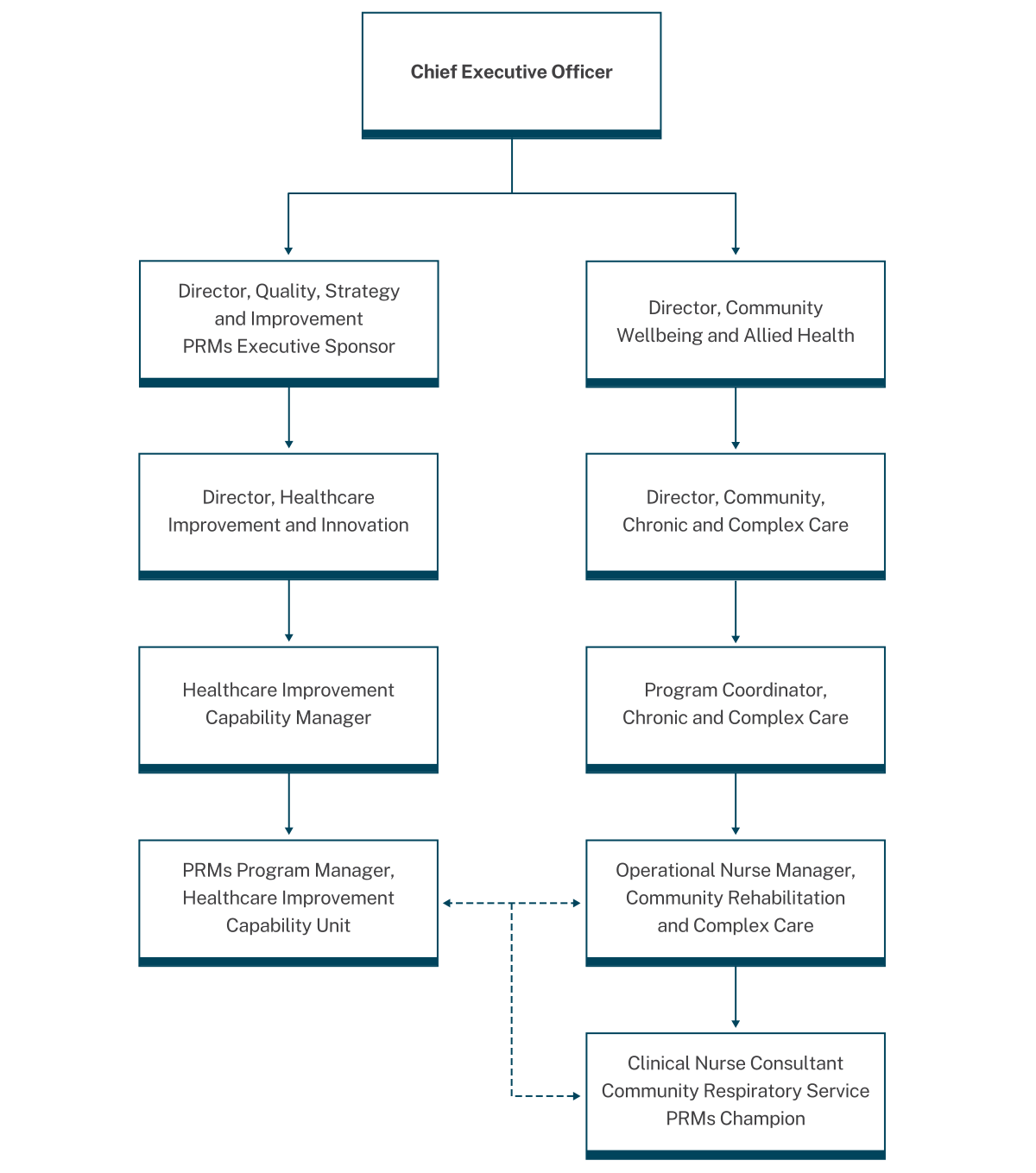
Governance
- The CCLHD Director of Quality, Strategy and Improvement serves as the Executive Sponsor for the PRMs program and HOPE implementation. The role involves providing high-level leadership and governance to align the program with the LHD’s strategic objectives.
- When a service is selected for PRMs and HOPE implementation, a primary sponsor is selected. This sponsor assists with compliance, risk management and provides necessary support for successful implementation.
- Clear communication plans are established when partnerships are identified. This ensures continued governance and support. Engagement with the communications team helps to promote and raise awareness about the program.
Acknowledgements
We acknowledge and thank the following for their participation in this project:
- Lorna Hatcher, Clinical Nurse Consultant (CNC) Community Respiratory Service
- Fiona Wilkinson, Executive Sponsor, District Director Quality, Strategy and Improvement
- Maya Simtran, Director Healthcare Improvement, Healthcare Improvement Unit, Quality, Strategy and Improvement
- Dr Brooke Sinderberry, Healthcare Improvement Capability Manager & Specialist, Quality, Strategy and Improvement
- Rhonda Power, Patient Reported Measures Program Manager
- Loran Hutchison, A/Patient Reported Measures Lead
- Rebecca Francis, ACI Patient Reported Measures Project Officer