Published: August 2024
The Virtually enhanced Community Care (VeCC) Service is a multidisciplinary service. It supports patients to manage their health conditions at home using digitally-enabled care that reduces their risk of hospitalisation and allows for early discharge.
Illawarra Shoalhaven Local Health District (ISLHD) started the VeCC service in 2019. The service initially remotely monitored small numbers of patients with chronic disease. This surged during the COVID-19 pandemic.
The ISLHD created the service as part of its five-year plan, with the aim to:
- address evolving needs and the increasing demand for digitally-enabled care
- provide alternative pathways of care, including opportunities for self-management
- improve patient outcomes and experience.
This service has expanded. It now provides a complex, acute, hospital bed substitution service, called the Virtual Health Ward (VHW).
Reasons for change
- Demand for healthcare continues to increase. The population is aging and there are more complex and higher acuity patients. This, combined with limited funding, places significant pressure on the health system.
- Caring for patients in a non-hospital (virtual care) setting provides an alternative pathway. This reduces the burden of treatment and healthcare costs and improves patient outcomes.
- The needs of ISLHD patients are evolving. Understanding the impact of current virtual care practices, future demand trends and investment allows improvement in service delivery to meet these needs.
Consumer experience
Constance* went to the emergency department late one night with breathing difficulties. After spending a few hours there, it was decided she needed to be admitted to hospital for a few days. Constance was asked if she would like to be a part of the Virtual Hospital Ward.
Initially she was hesitant, but quickly found the technology easy to use and the medical team extremely responsive.
I hadn’t really appreciated how it would work but when I was at home doing my first blood oxygen reading, it came up a bit low. I hadn’t even put the equipment back in the box and there was a nurse phoning to check on me.
*Name has been changed for privacy.
Model of care
VeCC has three streams.
Stream 1: Emergency Department to Community and Planned Care for Better Health
Purpose: To reduce the risk of hospitalisation
Supports patients with chronic health or social needs who have high emergency department presentations and hospitalisations by providing:
- patient-centred care
- care coordination
- care navigation
- health coaching.
Stream 2: COVID-19 and chronic disease management
Purpose: To reduce the risk of hospitalisation
Empower patients with chronic disease in their health care decisions by providing:
- remote patient monitoring
- remote real-time assessment by clinicians
- patient-centred care
- care coordination
- care navigation
- health coaching.
This is achieved through remote patient monitoring of:
- blood pressure
- oxygen levels
- blood glucose levels
- weight
- specific symptoms.
Stream 3: Virtual Hospital Ward
Purpose: To support early discharge
Supports patients who would otherwise be in hospital.
Monitored a minimum of three times a day, VHW provides patients with access seven days of the week to nursing and medical support via remote patient monitoring of:
- blood pressure
- oxygen levels
- blood glucose levels
- weight
- specific symptoms.
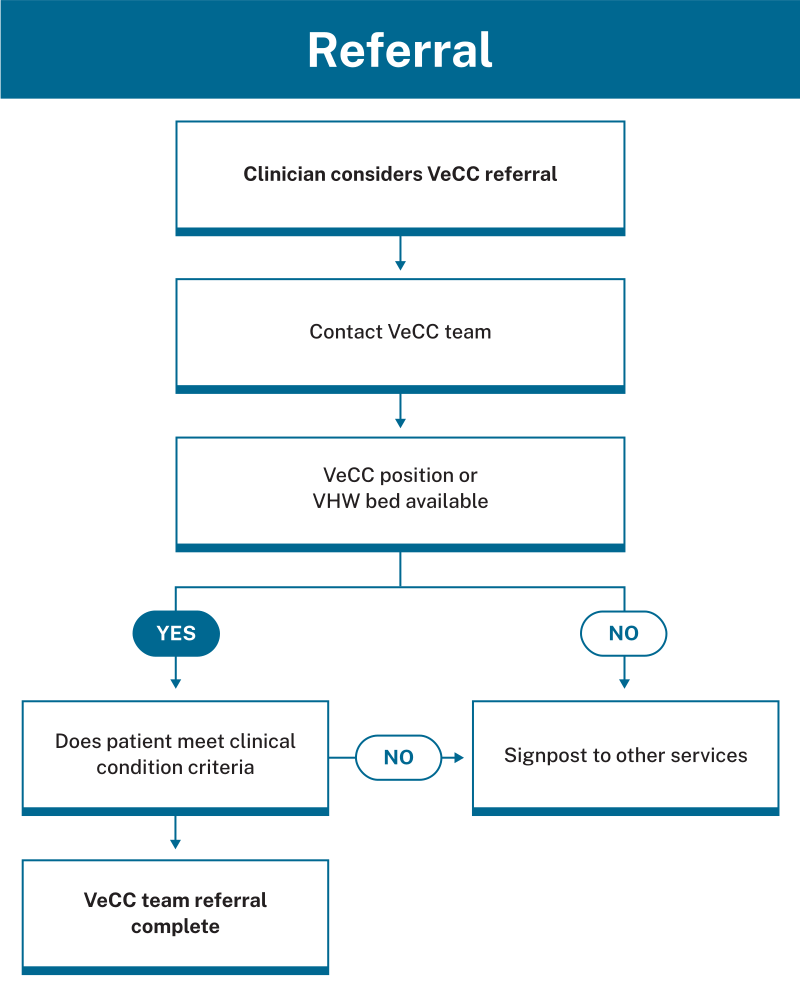
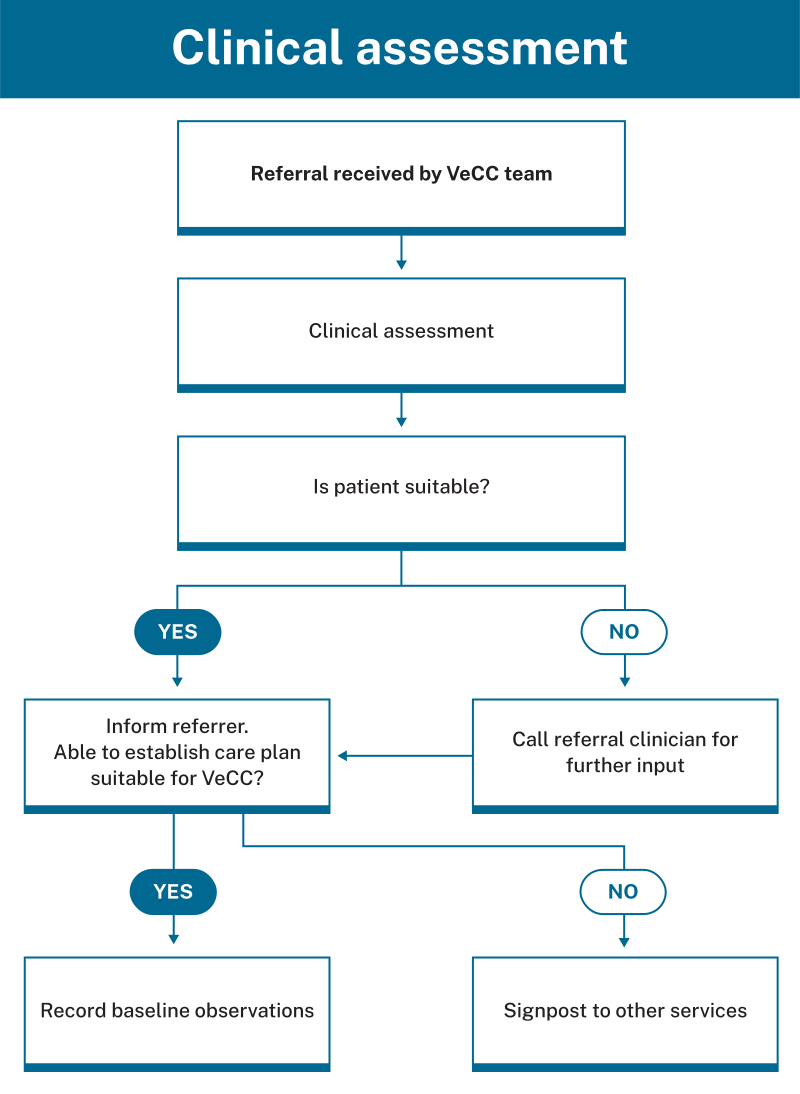
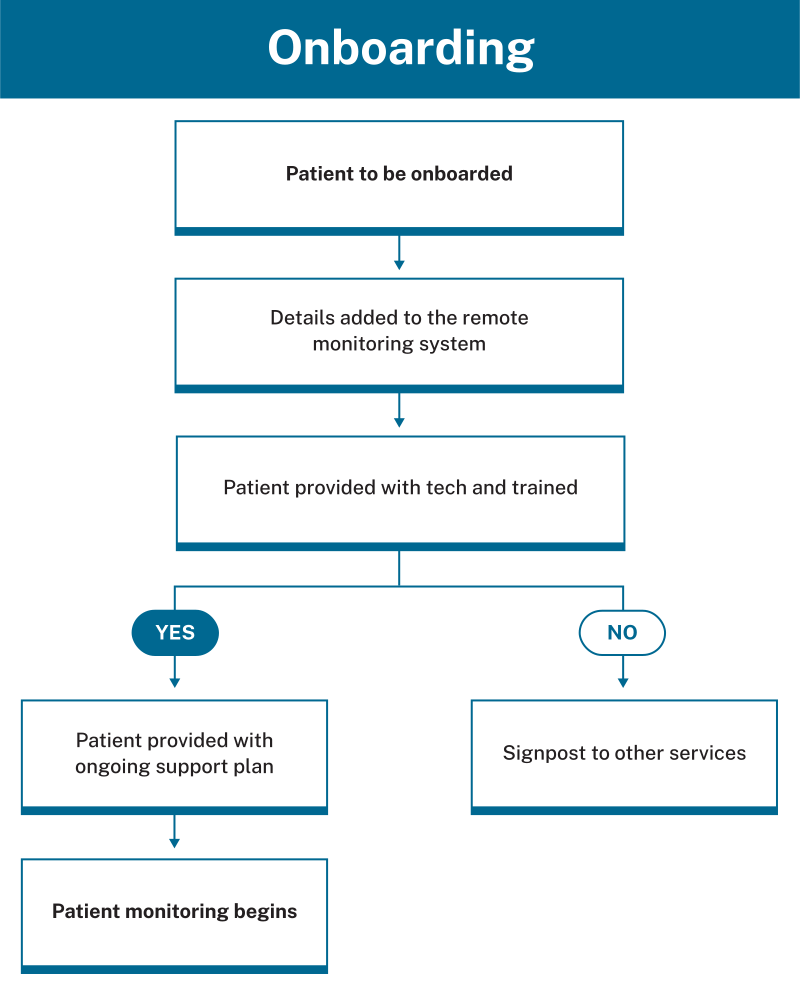
Referrals
VeCC has a well-established pathway to identify virtual patients.
Pathway for patient selection
Other referral elements
- The VHW coordinates between 4-14 referrals of patients with acute conditions per day into their 28 bed Hospital in the Home ward. Occupancy target is 85%. Referrals to and from VHW are medical officer to medical officer.
- Target cohorts for referral include seven diagnosis-related groups (DRGs) – respiratory system disorders, heart failure and shock, viral illnesses, respiratory infections and inflammations, kidney and urinary tract infections, chronic obstructive pulmonary disease (COPD) and cellulitis. Hyperemesis gravidarum is also supported.
- There is a pathway for surgery, e.g. hip and knee replacement. This enables patients identified pre-surgery to transfer to the VHW within 24 hours of surgery.
- VeCC leverages use of the Integrated Care Risk of Hospitalisation algorithm and the Planned Care for Better Health and Emergency Department to Community programs. This allows them to monitor up to 250 patients who are at increased risk of hospitalisation. ISLHD is also working on other predictive algorithms for hospitalisation.
Team
A centralised team offers a seven-day, 8am-8pm medical and nursing roster, including general practitioners (GPs), visiting medical officers (VMOs) and registered nurses. They are supported by:
- a staff specialist medical lead
- administration
- allied health
- management
VeCC is located on the health service campus with outreach to Shell Harbour and Shoalhaven. Acute, community nursing and allied health staff treat virtual patients collaboratively. They use a hybrid approach of virtual and in-person care.
Technology
The model of care is platform agnostic. Initially the service was enabled by ‘Engage’, Phillips' remote patient monitoring platform.
Implementation
Implementation of VeCC and the VHW took place across a five-year trajectory:
Start date: January 2020
Achievements:
- Model of care and service manual developed
- Virtual care technology trialled
- Patient cohorts identified
Start date: October 2020
Achievements:
- Patient protocols trialled and evaluated within a small patient cohort
- Successfully implemented, patient numbers expanded
- Chronic disease cohort of patients provided ongoing care safely throughout the COVID-19 pandemic
Start date: March 2021
Achievements:
- Patients with COVID-19 cared for at home or in special health accommodation
- Approximately 5,000 patients cared for over a 18-month period by a multidisciplinary team, including nursing and allied health
- Surging of VeCC staff to over 50 full-time equivalent (FTE)
Start date: July 2022
Achievements:
- 797 encounters in 12 months
- Expansion of cohorts including acute medical patients, chest trauma patients, same-day hip and knee joint replacements
- Establishment of the hyperemesis gravidarum clinic
- VHW initiated treatment for remdesivir patients in their own home
Key enablers
Impacts and outcomes
In 2022/23, ISLHD analysed their virtual care to look at the:
- impact of their existing virtual care practices
- areas of success and development
- future patient demand
- future resourcing delivery needs and initial investment outline.
Findings
VeCC and VHW provide a meaningful alternative care pathway. This enables better patient, organisation and financial outcomes.
Alternative care pathways
- Patients suitable for VeCC are becoming exponentially more resource-intensive.
- Seven DRGs generate the highest number of encounters and are some of the most resource-intensive.
- Virtual care provides an alternative care pathway to address in-demand DRGs.
Financially sustainable
- Caring for acute COPD, respiratory, heart failure, cellulitis, kidney and urinary tract infections is significantly cheaper through the VHW.
- Treating chronic COPD, heart failure, and respiratory infections are $38, $19 and $7 cheaper per encounter than patients treated through traditional care pathways.
Better organisational outcomes
- After reaching a critical mass of approximately 8,000 patient encounters, there has been reductions in length of stay, bed days, emergency presentations and treatment volume.
Positive patient experiences and outcomes
- Patients using virtual care overwhelmingly report positive health, experience and care outcomes.
- Virtual care is not detrimental to clinical performance and treatment efficacy.
Acknowledgement
We acknowledge Rupert Cole (Director Analytics) and Kristi-Lee Muir (VeCC Service Lead) for their support and information required to document this Insight.