Continuous bladder irrigation (CBI) is used to reduce the risk of clots forming and maintain indwelling urinary catheter (IDC) patency by continuously irrigating the bladder via a 3‑way catheter.
The 3‑way catheter allows fluid to flow in and out of the bladder simultaneously. A large gauge IDC allows for drainage of clots and debris.
The use of 0.9% sodium chloride is recommended. Use sterile equipment and aseptic technique.
Monitor continuous bladder irrigation closely to ensure adequate outflow, prevent overdistension, and promptly identify increased bleeding or obstruction.
Use the Continuous bladder irrigation checklist (PDF 210.7 KB) to demonstrate competency to safely perform this procedure.
Before undertaking the procedure, the nurse, medical officer or student should be able to demonstrate an understanding of the procedure and be able to carry it out safely, in accordance with the standards and protocols established by the local health district (LHD) or healthcare provider.
Equipment
- Personal protective equipment (PPE)
- Alcohol‑based hand rub
- Dressing trolley
- Dressing pack
- 1 or 2 sodium chloride 0.9% irrigation bags, as per LHD policy (irrigation bag volume as per facility procedure)
- Cleaning wipes, as per LHD supply and environmental cleaning protocols
- 6 x alcohol swabs, as per LHD supply (70% alcohol swabs or 2% chlorhexidine and 70% alcohol swabs)
- CBI set
- IV pole
- Sterile gloves
- Waste bag
- Disposable underpad
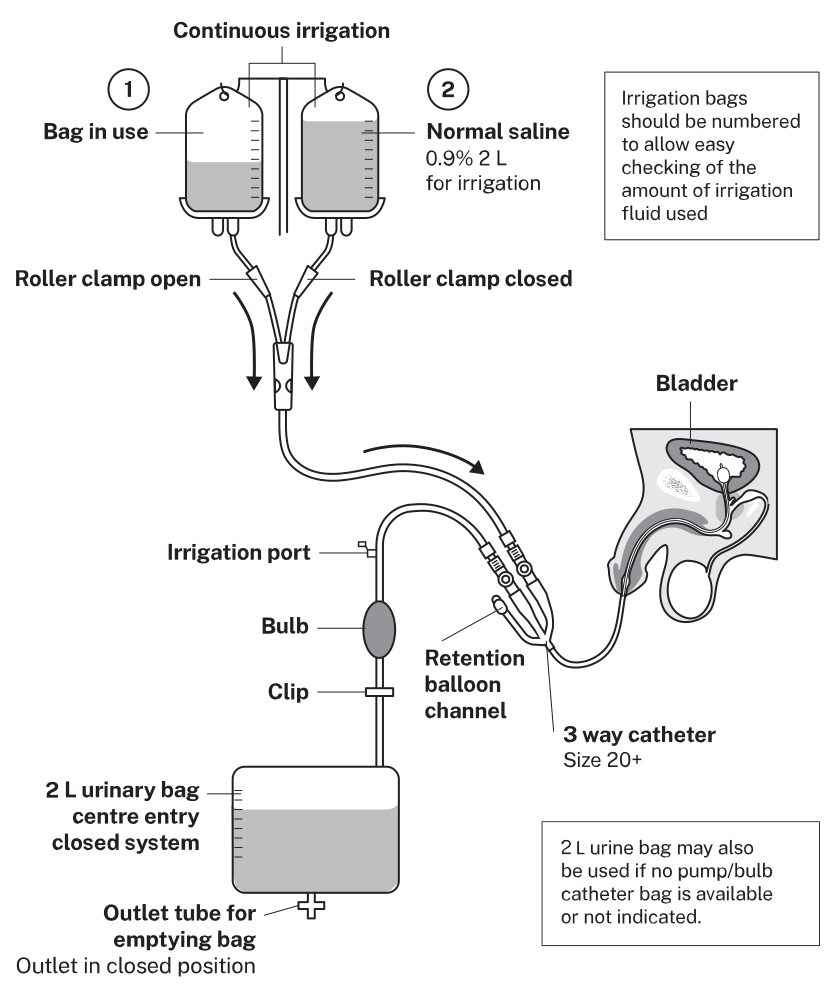
Continuous bladder irrigation procedure
Continuous bladder irrigation aims to remove clots, restore urinary drainage and maintain catheter patency. Throughout the procedure:
- maintain aseptic technique
- minimise contamination
- support patient comfort and safety
- accurately document outcomes and fluid balance.