Patients and their care teams should discuss what is important to the patient and what they need to live well, while considering the likely medical outcomes of different treatment options.
Renal team members should start these conversations by asking patients what matters most to them.1
When making decision about treatment choices, patients, along with their families and carers, usually speak first with the nephrologist (kidney doctor). Ongoing, two-way conversations often continue with an options or chronic kidney disease (CKD) nurse. Members of the renal supportive care team, such as a nurse, social worker, dietitian, doctor or clinical psychologist (if available), may also be part of these discussions.
Patients may be referred to other support clinicians and then return to their nephrologist to take part in the final treatment decision.
The diagram below illustrates the contributions both patients and clinicians make to the decision-making process.
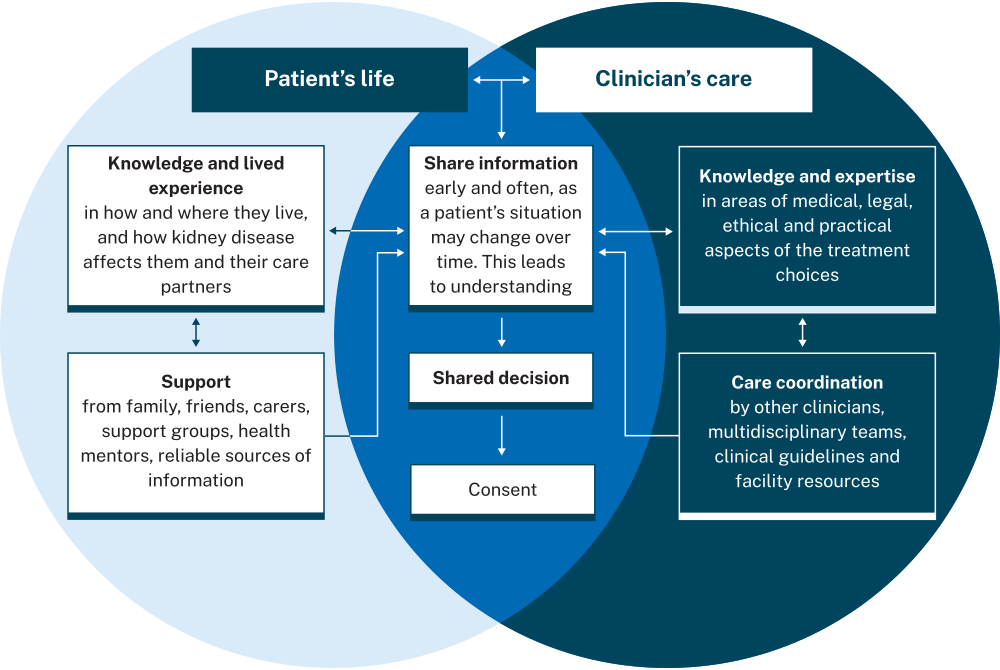
Areas of knowledge
When making decisions, both clinicians and consumers are affected by their:
- culture
- values
- experiences
- capabilities
- knowledge
- preferences
- motivation.
The renal healthcare team has knowledge and expertise in medical, legal, ethical and practical aspects of the treatment choices available.
The patient (and their partner, family members and carers) has knowledge and living experience in how they live. Only they know how kidney disease affects their life.
Shared decision-making can occur when both these knowledge areas are discussed together, including risks, benefits and alternative treatments. The best treatment choice for each person, for the right reasons, can then be found.
Patient consent then follows the shared decision.
Resources
Consumer enablement guide – shared decision-making
Shared decision-making is not just about providing education, and it is not the same as informed consent. It involves discussing the risks and benefits of each option available, taking into consideration the person’s values, preferences and circumstances.
Source: Agency for Clinical Innovation
Patient wishes
The patient’s wishes take priority over those of family members and carers, and the care team must protect the patient’s psychological wellbeing. Patients have the right to make an initial decision about their preferred treatment and to have a meaningful role in deciding their way forward.
In some situations, a patient may choose to have their family or carers make health decisions for them, or to share decision-making with them. Clinicians should not make assumptions and must always ask patients who they want involved.
For medical, ethical, or practical reasons, clinicians may not offer all treatment options to every patient. Doctors place patient safety first and follow the principle of “do no harm”. When clinicians do not offer a treatment option, they must clearly explain the reasons to the patient.
Clinicians should consider additional needs for Aboriginal people, children and young people, refugees, people from culturally and linguistically diverse backgrounds, and people with limited English. They should arrange translation services when needed.
For any treatment, the following may be true:
- Patients have different needs and management plans, even though many people with CKD share common management issues across treatment options.
- The care team must check that the patient understands their management plan, including daily activities, diet changes and other actions needed to maintain their quality of life.
- The clinical team must also recognise that each patient has unique circumstances, values and preferences, and take these into account when planning care.
- Many patients take multiple medications for CKD and other health conditions. The clinical team must explain what each medication does, why the patient takes it, and whether medications interact with each other. Using medication cards helps patients and supports clear communication between the renal team, GP and other specialists, allowing clinicians to coordinate and adjust medications when needed.
References
- Milnes S et al. Patient values informing medical treatment: a pilot community and advance care planning survey. BMJ Supportive and Palliative Care. 2017 Vol 9, issue 3. Cited 6 October 2023.
- Bekker HL, Winterbottom AE, et al. Decision aids to assist patients and professionals in choosing the right treatment for kidney failure. Clinical Kidney Journal, 2023, vol. 16, Suppl 1, i20–i38. DOI: 10.1093/ckj/sfad172.