The Flexible Diuretic Regimen: Clinical Practice Guide supports clinicians to use a flexible diuretic regimen. The purpose of the guide is to manage fluid weight gain and symptoms of fluid retention for patients with heart failure in the community setting.
Diuretic therapy is important to relieve the symptoms of fluid retention associated with heart failure. An individualised regimen aims to stabilise patients with heart failure in their home environment. This reduces preventable admissions to hospital. It supports the transition of care from hospital to the community setting.
Patients with heart failure often have multiple comorbidities. Managing their care is complex and may result in frequent hospital presentations. Care for these patients should be multidisciplinary and integrated.
Resources

Flexible diuretic regimen: Clinical practice guide
Published: August 2024. Next review: 2029.
This clinical practice guide is for clinicians working in the community and general practice.

Flexible diuretic action plan for heart failure
Published: August 2024. Next review: 2025.
Clinicians can use the action plan to create an individualised FDR for suitable patients and their carers.
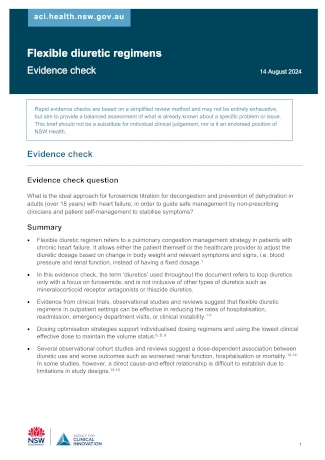
Flexible diuretic regimen: Evidence check
Published: August 2024. Next review: 2029.
The evidence check outlines the results of a literature review about the use of flexible diuretic regimens to stabilise the symptoms of adult patients with heart failure.