Thank you to the clinicians, health managers, consumers and stakeholders who've worked with us throughout 2025 to drive healthcare innovations across NSW.
Clinical network updates
The latest news, moves and events from our clinical networks.
Improving stakeholder engagement across the healthcare sector
The Aboriginal Health and Wellbeing Network (formerly the Aboriginal Chronic Conditions Network) has a new member portal and fortnightly newsletter. Our aim is to create a space where we can listen to and learn from our members, share the work our members are leading, and promote opportunities to engage with each other and other ACI clinical networks.
For access to the member portal and newsletters, join the network.
Join us at the 2025 Aboriginal Health and Wellbeing Conference
We are pleased to be hosting our 8th annual conference in partnership with the Aboriginal Health and Medical Research Council of NSW, and in collaboration with the Centre for Aboriginal Health and NSW/ACT Primary Health Network Aboriginal Health Network.
This year's theme is From the ground up: Aboriginal leadership transforming health innovation and research. We will be exploring the powerful role of Aboriginal leadership in reshaping health systems and research practices.
The conference will take place 10 - 11 November at Rydges North Sydney and online.
Caring for older people with frailty
New resources from the network outline four clinical priority areas to identify and support people who are pre-frail or frail, and three models of care for health services and clinicians to better manage people living with frailty. They draw on the latest evidence and what is important for clinicians and patients.

Dementia Action Week
Ahead of Dementia Action Week, the network came together with Dementia Australia for an interactive event for NSW Health staff (pictured above) that offered everything from powerful lived-experience stories to hands-on virtual reality and AI tools.
"While dementia changes many things, it does not change your humanity," said living experience ambassador William Yeates, who cared for his father and now lives with dementia himself.
Golden Guitar-winning country music singer Adam Harvey, who performed his beautiful song "Remember Me", and spoke with fellow ambassador actor Jessica Redmayne about their experiences supporting their mothers.
Amanda Wyzenbeek spoke about navigating the health system as a migrant to Australia while supporting her mother, while Kay Hughes shared how music has helped her explore her experiences caring for her husband.
Sincere thanks to all our speakers, whose insights challenged assumptions, encouraged empathy and inspired us to identify ways the healthcare system can better support carers and those living with dementia.
See more photos from the event on LinkedIn.
A new End of life care at home toolkit provides information for carers who are supporting their loved ones who wish to die at home or on Country. It offers useful links and resources from trusted organisations – all in one place. Users can search by topic to find the information they need.
Learn more about the End of Life and Palliative Care Network
The network is supporting a pilot for a statewide gestational trophoblastic disease (GDT) multidisciplinary team (MDT) clinical service. This is a statewide initiative developed by the GTD working group. The pilot aims to enhance care by providing centralised access to multidisciplinary expertise, while continuing to support patient care through their local specialist teams.
During this pilot, Chris O’Brien Lifehouse is hosting the NSW gestational trophoblastic disease multidisciplinary clinical service and providing consultation, monitoring and care planning. The services are offered remotely and available for patients living anywhere in NSW. During the pilot, clinicians are encouraged to refer all patients with GTD or high index of suspicion of GTD to Chris O’Brien Lifehouse for monitoring.
Driving home road safety at BStreetsmart
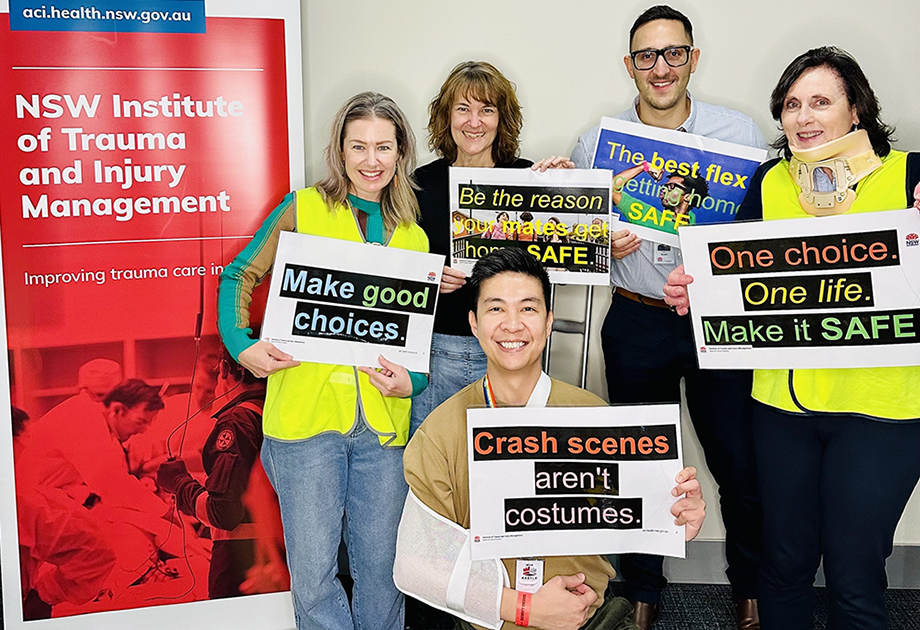
We were proud to be part of BStreetsmart, Australia’s leading youth road safety event at Sydney Olympic Park recently. For students in years 10 to 12, BStreetsmart delivers a powerful, practical look at the consequences of risk-taking behaviour on our roads, through live crash re-enactments, raw survivor stories and hands-on exhibits.
Around 600 students stepped into our ineractive booth at the event to try on real medical equipment and snap photos with road safety messages. Behaviours like speeding and inexperience contribute to 44% of road fatalities in NSW. The booth aimed to raise awareness about the devastating consequences of dangerous driving through connecting with students and empowering them to share the message with peers.
The booth was delivered in collaboration with the ACI’s Brain Injury Network and Drug and Alcohol Network, highlighting the importance of a coordinated approach to road safety education and injury prevention.
This work directly supports our strategic priorities related to injury prevention, empowering communities with knowledge, reducing preventable harm and building safer systems. It also aligns with the ACI’s goal to improve health outcomes through innovation, collaboration and education.
Webinar engages health professionals across NSW
We recently hosted a trauma team training webinar, bringing together trauma health professionals from across NSW. The session focused on practical strategies to enhance teamwork, communication and patient outcomes during high-pressure trauma situations.
Participants heard from experienced educators from the Sydney Clinical Skills and Simulation Centre, explore real-life scenarios and discussed best practices in trauma care. The interactive format encouraged questions and shared insights, helping attendees to reflect on their own clinical practice.
In response to feedback from attendees, we will will establish a training support network. The initiative will offer drop-in sessions and webinars to help trauma clinicians kickstart or strengthen their own trauma team training programs.
Building the confidence and skills in trauma team responses ensures patients receive the best trauma management by a team who communicates well and delivers timely care. We encourage all trauma health professionals to join upcoming sessions and be part of this network.
Trauma team training is facilitated locally by each trauma services in NSW. Please reach out to your local trauma service for more information.
Trauma ‘Code Crimson’ pathway
Evidence shows that time-based trauma triage criteria help predict appropriate trauma team response and resource allocation. We have published an updated clinical practice guide for the 'Code Crimson' pathway aims to enhance the management of patients with life-threatening traumatic haemorrhage. It recommends pre-hospital medical retrieval teams initiate a ‘Code Crimson’ activation, thereby further reducing the time to definitive intervention in these patients.
We have published a new clinical practice guide on providing Physical activity and mobilisation for critically ill adults. It explains how to develop a program to safely mobilise critically ill adults in intensive care, from admission to discharge, including:
- clinical assessment for suitability
- the planning and equipment required
- delivery of physical activity and mobilisation sessions, including safety criteria and ongoing observation and reassessment.
The network is proud to support a new national online training program from OPEN - Online Pain Education Network, helping health professionals treating people with pain.
Built by clinicians, researchers and people with lived experience, our Pain Management Network co-chairs Associate Professor Paul Wrigley and Fiona Hodson contributed their professional expertise and provided user testing to the project.
Network manager Sue Rogers and stream lead Jenni Johnson were also members of the project’s expert external advisory committee for this program that moves beyond opioids and focuses on person-centred care.
We’re pleased to welcome Alyssa Clarke as the new Respiratory Network Manager. Alyssa brings a collaborative approach to advancing equitable, evidence-based respiratory care, with a strong focus on improving patient outcomes through innovation and system-wide improvement.
With a nursing background and experience across cardiac, intensive care and workforce settings, Alyssa has contributed to workforce development, clinical education and health service reform. Her previous roles include clinical nurse consultant, nurse educator and research trial coordinator.
Alyssa is looking forward to working closely with network members to drive meaningful change. She invites you to reach out and start a conversation by emailing ACI-Respiratory@health.nsw.gov.au
Statewide program updates
The latest news, moves and events from our statewide programs.
Information is now available for health professionals and consumers about NSW Government reforms that enable GPs to play a greater role in the management of people with attention deficit hyperactivity disorder (ADHD).
Developed in partnership with the Ministry of Health, the web-based resource includes information about the reforms; how GPs can participate and how consumers can assess their eligibility. Fact sheets and frequently asked questions provide clarity for GPs and consumers.
Celebrating 200,000 patient-reported measures
More than 200,000 patient-reported measures (PRMs) surveys have now been submitted, helping to shape a better, more responsive healthcare system
This significant milestone means that the voices of 75,000+ patients have been heard, as they complete PRMs surveys to share feedback about their health experiences and outcomes.
Since February 2024, the number of surveys collected has doubled, using the digital Health Outcomes and Patient Experience (HOPE) platform, delivered with eHealth NSW.
This increase is driven by expansion into areas of healthcare including burns, menopause, maternity, paediatric and general rehabilitation.
Thank you to the:
- 1,681 health services from local health districts, specialty health networks and primary care offering PRMs surveys to patients
- 4,000 clinicians who use the HOPE platform.
By embracing this healthcare innovation you're making a real difference in the lives of patients.
New video spotlighting patient-reported measures integration
Discover the benefits of integrating patient-reported measures into models of care, such as the NSW Health Menopause Initiative, in a new video.
Redesign and change management
The Centre for Healthcare Redesign team proudly hosted the graduation ceremony for the third cohort of the 2024 Graduate Certificate in Healthcare Redesign program.
On August 22, 36 students gathered alongside executive sponsors, redesign leaders, and key project champions to celebrate their achievements. The ceremony was a testament to the students resilience, skills, and the outcomes of their projects.
The graduates have joined more than 1000 alumni from NSW Health who have completed the course over the past 18 years.
Dr Jean-Frédéric Levesque, Deputy Secretary of Clinical Innovation and Research and Chief Executive of the Agency for Clinical Innovation, delivered a congratulatory speech and presented the graduates with their certificates.
The event highlights the impact the program has in empowering healthcare professionals to drive innovation and improvement across NSW Health.
Some of the standout project results included The Secret Life of Puffers from the Sydney Children’s Hospital Network and the Maitland Hospital team's Optimisation of operative services. Their outcomes show the real-world impact of redesign, with projects already delivering measurable improvements for patients, staff, and the health system.
More about the Graduate Certificate in Healthcare Redesign
When clinically appropriate, virtual care is a safe and effective mode of care that complements in-person care.
The Virtual care suitability toolkit has been developed to help healthcare providers and consumers to decide if virtual care is suitable. It promotes shared decision making with a focus on, person-centred care, choice and flexibility in how care can be provided.
The toolkit contains five components:
- Healthcare provider suitability checklist is a series of questions to help clinicians decide if virtual care is suitable for them and their consumer. The checklist covers topics such as the health system, service and other factors, to ensure person-centred, appropriate care aligned to the various modalities of virtual care.
- Determining clinical appropriateness supports healthcare providers explore their clinical judgement through a series of questions and examples to ensure care is delivered safely.
- Is virtual care right for me and my family...today? is a comprehensive guide providing consumers with information on what virtual care is and the benefits and examples of where and when virtual care could be used. The guide will be distributed as a printed booklet to the districts and is also available online, with a promotional brochure and poster available to support increased awareness.
- Consumer Suitability Checklist is six questions to help consumers decide if virtual care is right for them and their family at this time.
- Conversation Starters provides consumers with some easy ways to start a conversation with their healthcare provider about if virtual care is right for them. The conversation starters video showcases consumers starting a conversation about virtual care and how health providers might respond to find the best care options together.
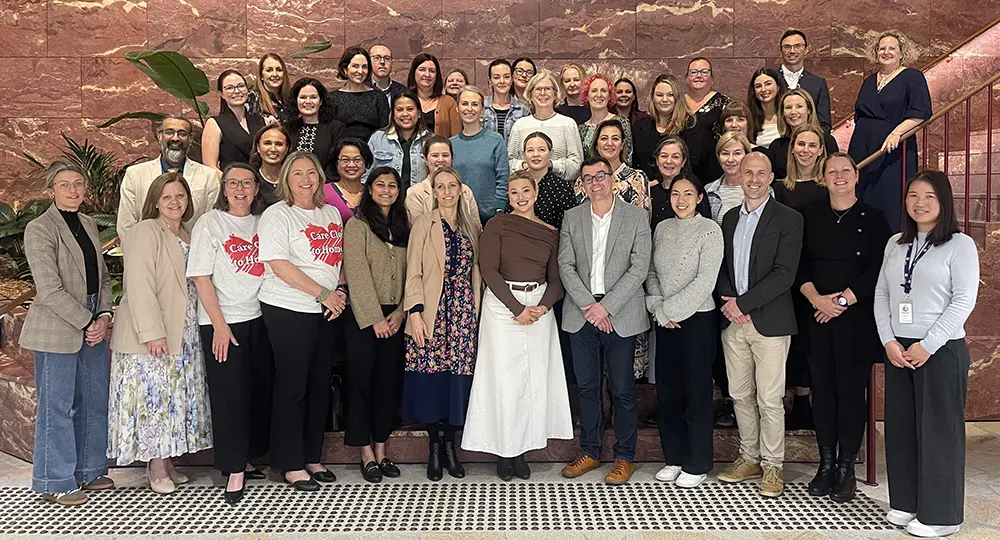
Thank you to the 60 clinicians and 50 consumers who were engaged and instrumental in developing this toolkit, including participating in a pilot across 10 services in metropolitan and rural districts that provided valuable insights into the tool’s usability and impact.