Case study: Nurse-led with multidisciplinary approach (Central Coast)
The following case study from Catherine Blackmore, Central Coast LHD, provided a clinician's perspective on models of care from a local perspective.
What is important to know about your service?
The Renal Supportive Care (RSC) service was established in 2015 and supports three primary groups:
- patients with stage 4-5 chronic kidney disease, 75 years old or older, who are managing their declining kidney function conservatively (without dialysis)
- patients wanting to withdraw from dialysis
- dialysis dependent patients experiencing an increase in symptoms.
What organisational model do you use?
The RSC service is a patient-centred, nurse-led model with an interdisciplinary approach using shared decision making to develop care plans that meet the patient's needs and goals.
 Shared decision-making
 Refer to renal supportive care
 Minimising patient suffering
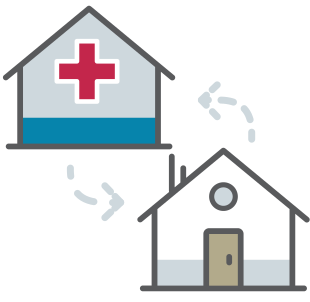 Ongoing supportive care
What is special about the way care is delivered?
The RSC service is led by a clinical nurse specialist with support from a dietitian and social worker.
An interdisciplinary approach brings the clinical nurse specialist, social worker and dietitian together with the patient to set goals for treatment and care. It also enables consultations with the patient’s nephrologist and general practitioner for ongoing medical input.
Specialised services such as community allied health, physiotherapy, occupational therapy, speech pathology and community palliative care are referred to according to each individual patient’s needs.
As early adopters of the Health Outcomes and Patient Experience (HOPE), our RSC service uses this platform (with the patients consent), to collect patient reported experience measures (PREMs) and patient reported outcome measures (PROMs). This allows the identification of the symptoms that are most troubling for the patient, and to what degree they are negatively impacting their quality of life. From this data we use shared decision making to develop care plans that are focused on the patient’s outcomes and goals.
There is an electronic medical record alert to flag renal supportive care patients who are admitted to a Central Coast LHD facility. This ensures a team member from the RSC service is able to visit the patient in a timely manner.
A companion document describes options for organisational models in renal support care. One option is a nurse-led service. This vignette describes the model from a local perspective.
How does it make a difference?
The interdisciplinary consultations ensure that patients are at the centre of care, and that decisions and plans that need to be made, can be made at one consultation. This results in patients and their families and carers feeling valued and supported.
What tips do you have for others?
- Always remember the patient and their families are the most important aspect of the Renal Supportive Care service.
- Collaborate with different disciplines to build and maintain an interdisciplinary approach.
- Keep lines of communication open – especially with nephrologists and general practitioners.
- Embrace new technology.