Thank you to the clinicians, health managers, consumers and stakeholders who work with us to drive healthcare innovations across NSW.
Clinical network updates
The latest news, moves and events from our clinical networks.
Welcome to our new Medical Co-Chair
The network welcomes Dr Janine Smith as Medical Co-Chair, a senior clinical geneticist at The Children’s Hospital at Westmead. She joins Genetic Counsellor Co-Chair Rachel Williams.
Thanks and farewell to Dr Lisa Worgan who is departing the Medical Co-Chair role. Lisa’s leadership over many years has been instrumental in influencing the direction of the network and genetic service innovation.
New guide to genetic testing
A new clinical practice guide is available for health professionals working in genetics and in other fields. It provides evidence-based advice to understand the clinical responsibilities involved in genetic testing.
New Community of Interest leadership group
Our new co-chair clinical executive group will lead the ongoing Menopause Community of Interest:
- Dr John Eden
- Dr Jessica Lai
- Dr Elina Safro
- Ms Theresa Sharp
- Ms Laura Worthing
The group meets twice yearly, with dates available to members on our SharePoint site and in our newsletters.
Thanks to the Menopause Taskforce co-chairs
Thank you to our outgoing Menopause Taskforce co-chairs, who have worked with us to guide the development and implementation of a new statewide model for complex menopause management:
- Professor Rod Baber
- Dr Amanda Beech
- Dr John Eden
- Ms Joanne Perks
Working with Aboriginal and Torres Strait Islander peoples
The Menopause Care Clinician Toolkit has been updated to include information and resources for clinicians working with Aboriginal and Torres Strait Islander peoples. Thank you to the working group and our statewide Sistapause Aboriginal menopause working group who guided this work.
Rehabilitation PROMs
Since rehabilitation Patient Reported Outcome Measures (PROMs) were launched in 2023, rehabilitation services in NSW have embraced using them and the Health Outcomes and Patient Experiences (HOPE) platform to understand what matters to patients.
Bulli Hospital and Dubbo Base Hospital were early adopters. They provided rehabilitation clinicians and patient-reported measures (PRMs) leads with valuable insights into implementing PRMs locally and how to integrate their collection into daily workflows.
There are now 23 general rehabilitation services using PRMs and more than 4,000 surveys have been collected. Work is also underway to implement PRMs into brain injury rehabilitation services.
The upcoming PRMs Symposium is also open for abstracts.
New Clinical Emergency Response System protocol template
Nursing staff who deliver haemodialysis treatments to stable patients living in the community can now tailor Clinical Emergency Response System (CERS) protocols for non-acute haemodialysis patients according to an agreed template.
Vital signs, such as blood pressure, outside normal ranges on standard observation charts in NSW are common for many haemodialysis patients and would technically fall into the Red Zone (rapid response needed).
Local protocols allow nurses to distinguish between a normal or deteriorating condition for a haemodialysis patient.
Thank you to the Clinical Excellence Commission and Directors of Clinical Governance for working with us to find a solution in this specialised area of clinical care.
Welcome to Consumer Co-Chair Charbel Saad
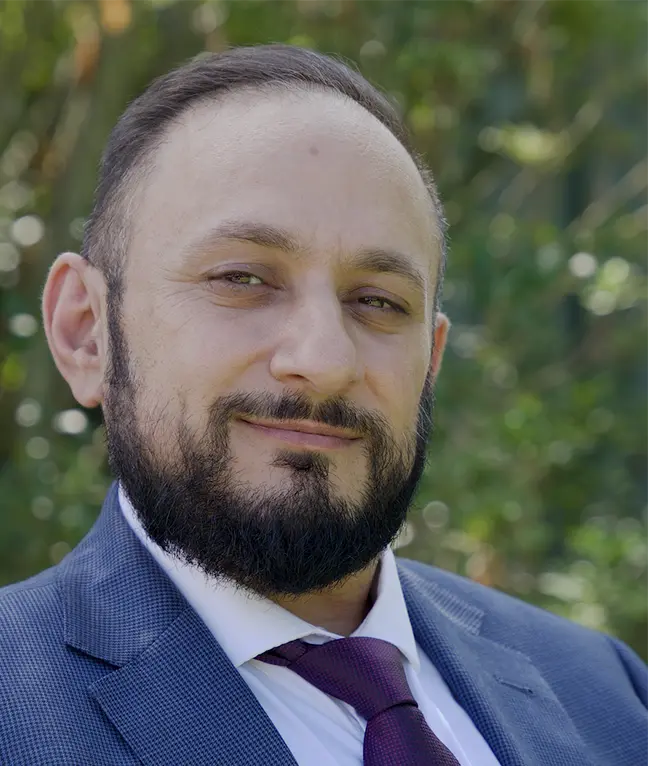
Our new Consumer Co-Chair Charbel Saad has 30 years of lived experience as a renal patient and nearly 16 years on dialysis. He is a member of many consumer focus groups, recently graduated with a Bachelor degree in Medical Science from Western Sydney University, and volunteers for NSW State Emergency Services.
Charbel replaces Brad Rossiter OAM, who spent more than four years in the role. Many thanks to Brad for his insights into the consumer perspective, tireless advocacy and championing of the Donate Life campaign.
Join the Stroke Allied Health Community of Practice
Our Community of Practice for allied health professionals meets bi-monthly to spotlight services, share ideas and troubleshoot challenges in stroke care. To join, contact Stroke Network Manager Natalie Wilson.
Improving door-to-needle times in stroke care
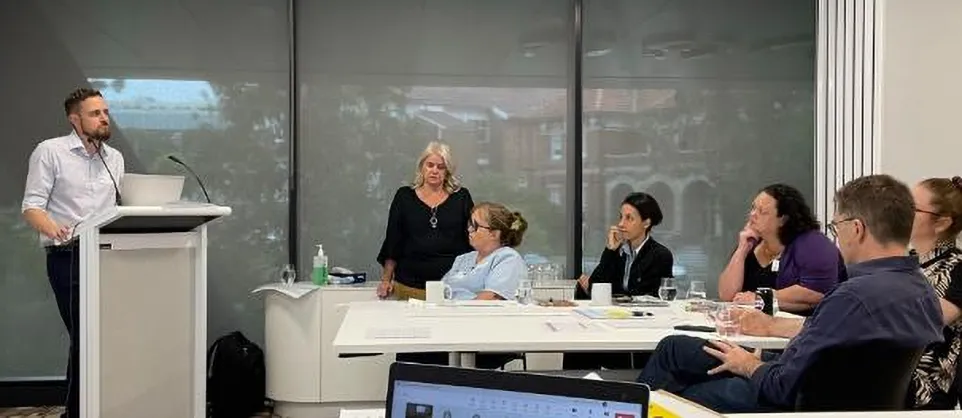
The network recently convened a round table discussion for clinicians across NSW on improving door-to-needle times in stroke care. The group discussed strategies to:
- streamline hospital workflows
- enhance ambulance-hospital coordination
- leverage data to improve care.
The importance of statewide alignment while supporting local innovation was also highlighted. Insights from the event will help ensure faster and more effective stroke treatment across NSW.
Hip Fracture Clinical Advisory Group
The Hip Fracture Clinical Advisory Group is hosting a webinar session on mobilisation and weight bearing on Thursday 8 May.
Surgeons, health service managers and nursing, allied health and medical staff are encouraged to attend and learn about supporting the Australian Commission on Safety and Quality in Health Care’s Hip Fracture Care Standard.
Launching our Aboriginal artworks
Two Aboriginal artworks created by Aboriginal artist Georja Bennett, a proud Wodi Wodi woman, were launched at a network event in November. The artworks will be used in network resources.
The first piece is titled Gulyangarri Galuwa Nura, which means children climb country. It represents the journey young people go on to develop their health and wellbeing, and the point of transition from childhood to adulthood.

The second piece is titled Gulbangadara Gulyangarri, which means to honour children. It celebrates the strength and resilience of young people and that the ever-varying aspects of our youth cannot be depicted in a single picture alone.

Join the network leadership group
We are changing our structure and creating a new leadership group to engage with more stakeholders.
We are seeking four to six health professionals who are passionate about transition care to join the new group and drive network priorities and projects.
The group will be a mix of paediatric clinicians and managers, adult health service clinicians and managers, general practitioners and consumers. We will meet every four to six weeks for 45-60 minutes.
If you are interested in this opportunity, please complete this expression of interest form or email network manager Rachael Havrlant.
Statewide program updates
The latest news, moves and events from our statewide programs.
Developing culturally appropriate resources for Aboriginal people
The ACI is leading a project with Illawarra Shoalhaven, Western NSW, Murrumbidgee LHD and Southern NSW Local Health Districts, to develop culturally appropriate resources that support patient-reported measures (PRMs) education, onboarding and ongoing implementation in Aboriginal health services.
The project aims to develop culturally appropriate and meaningful resources that increase Aboriginal people’s understanding of PRMs in relation to their healthcare and quality of life.
Submit your abstract for the Patient Reported Measures Symposium
The upcoming PRMs Symposium will explore how PRMs can drive meaningful transformation in healthcare by providing a platform for the patient voice. By focusing on the integration of patient-centred data into clinical decision making, policy and research, we aim to spark discussions on how to make healthcare systems more responsive, personalised and effective.
Our 2025 symposium theme is Driving Impactful Change: Empowering Patient Voices for Transformative Healthcare.
To share how you are using PRMs to drive change and present at the symposium, learn more about the event and submit your abstract online by 20 April.
A partnership between the University of Sydney and the ACI has secured a $345,000 National Health and Medical Research Council grant to implement Finding Your Way – one of the first shared decision-making models designed with and for Aboriginal people.
The funding is a major step forward in embedding culturally safe shared decision-making in healthcare. It will help us:
- drive sustained, system-wide sustained implementation of the model
- strengthen community partnerships
- explore how implementation science frameworks can be culturally adapted with Aboriginal communities.
The project addresses priorities in the NSW Aboriginal Health Plan 2024–2034 and will enhance culturally safe healthcare for Aboriginal people. The project team is focused on testing and strengthening the model's cultural safety and co-designing an implementation framework with community.
Congratulations to the project's chief investigators Heather Shepherd, David Follent, Marguerite Tracy, Tara Dimopoulos-Bick, Michelle Dickson, Emma Webster, Cory Paulson, Melissa Cawley, Gail Garvey, Lyndal Trevena and Paul Lunney.
Thank you to the project's Aboriginal Governance Group for supporting this important grant.
Explore the Virtual Care Spotlight series
Two new projects are now available to explore in our Virtual Care Spotlight series. The series shares how technology is used and incorporated to provide care virtually in local health districts, speciality networks and statewide services.
Virtual functional neurological disorder treatment group program
A successful group program in the Illawarra Shoalhaven Local Health District. Access to local functional neurological disorder services can be challenging and have a significant impact on a person's quality of life. Since 2020, participants in this six-session program, led by clinical psychologists, have focused on grounding techniques and other skills to manage symptoms.
Virtual Preoperative Education and Prehabilitation Program
An in-person, evidence-based prehabilitation program goes virtual. The program has saved Nepean Hospital more than $560,000 and has been well received by patients, with 90% rating it as highly useful.
Innovation Exchange
The latest projects on the Innovation Exchange will inspire you to make improvements to your own service.
The Satellite Triage Assessment Service
Northern Sydney Local Health District (LHD) has partnered with Central Coast LHD to explore offering a satellite assessment clinic at Gosford Hospital for Royal North Shore Hospital (RNSH) spinal pain patients living on the Central Coast.
RNSH offered a clinic to patients once a month for a trial period of a year. The team estimates the clinic has reduced by 85% the median return distance travelled by patients. This is an average saving of $54 per patient in petrol, or a total of $1,774 (based on average fuel consumption and cost).
The ‘Steel got it!’ project
This project aims to reduce the use and environmental impact of single-use plastic holloware in RNSH operating theatres.
Based on the data collected, using metal holloware would divert an estimated 4.25 tonnes of clinical waste from landfill annually, that’s approximately 21,000kgCO2e.
86% of staff surveyed were concerned about the use of single-use plastic holloware, and 91% preferred metal holloware.
The ‘Pill-easing the planet’ project
This project aims to optimise pharmaceutical waste management in all Hornsby Ku-ring-gai Hospital clinical areas.
The project team introduced a dedicated pharmaceutical waste stream to clinical sites in Hornsby Ku-ring-gai Hospital. Through a statewide waste provider, the team requested Pharmasmart bins and piloted them on six wards.
Using these bins is projected to save up to 9.9 tonnes of pharmaceuticals from entering landfill or waterways each year.