Queer Joy by Mat Pal
Mat says:
As the artwork is aimed at teenagers, I have used emoji imagery to recreate the rainbow flag. I have also included the pink triangle, which the Nazis used in concentration camps during World War II to denote gay people. It was later taken by the LGBTQ+ community and turned into a positive sign to denote a safe space for our community, before the rainbow flag. I think it is important to understand our history and acknowledge the struggles of the past, many of which we are still fighting today. It is also an important reminder that current situations are not permanent, and we can grow and learn from these experiences.
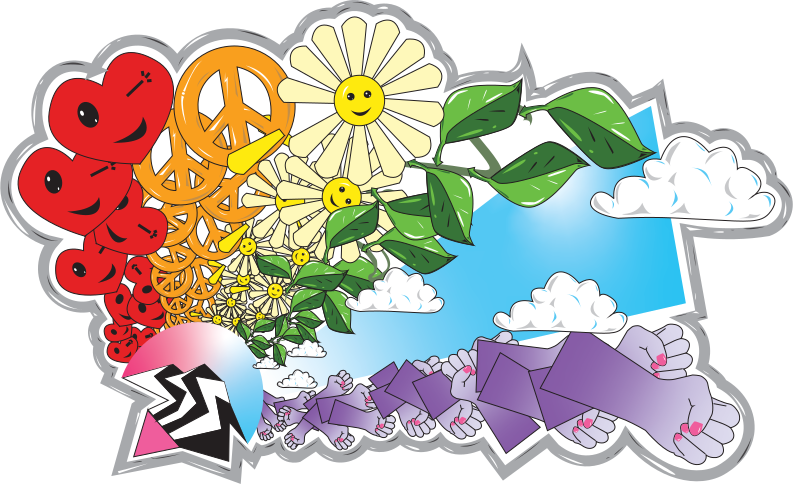
The black and white zig zag represents the black and white world we live in, the binary, which does not allow for the shades of grey that human gender identity and sexuality entails. All of us in the LGBTQ+ community have had cause to question the binary at some point.
Around the zig zag is a halo of the trans flag colours. The trans community is currently facing a great deal of hatred. I wanted to show that they are often the strongest among us, there would be no queer community without its trans members.
The rainbow flag spouts from this showing the colourful world of sexuality and gender identity we live in. There is also a silver lining to signify that life will not always be as difficult as it currently seems.
The title Queer Joy also has positive connotations. The word queer was traditionally used as a slur but over time the LGBTQ+ community has turned it around and embraced it.
Each of the remaining symbols and their colours denotes a different positive aspect of life.
| Growth | Green |
|---|---|---|
| Joy | Yellow |
| Love | Red |
| Peace | Orange |
| Pride | Purple |
| Wonder | Blue |





About the artist
Mat Pal is an illustrator with a background in fashion illustration, and a member of the LGBTQ+ community. His work includes illustrations published in The Party Dress by Alexandra Black (Rizzoli, 2007), murals in Melbourne and Sydney, and campaign illustrations for ACON.